

And other aspects of celebrating Easter as Orthodox Christians in Romania in 2026
Article originally published in Middle-Pause on Medium on April 17, 2026
On April 12, we celebrated Easter Sunday as Orthodox Christians. It’s the most important religious holiday here in Romania, even more so than Christmas.
In preparation for it, I have fasted for 40 days, eating only vegan foods, I have done some general cleaning around the apartment, and have helped my mother prepare several feast meals, including turkey soup, salată de boeuf, salad with turkey meat and vegetables (more on this later), and stufat, lamb stew with green onions and green garlic (good video recipe here).
We also dyed some red eggs, and Mom prepared some grilled beef tenderloin with Gorgonzola sauce, a dish she once ate at a restaurant and then adopted for New Year’s, as well as possibly for Christmas and Easter. Here’s a good version of Mom’s recipe.
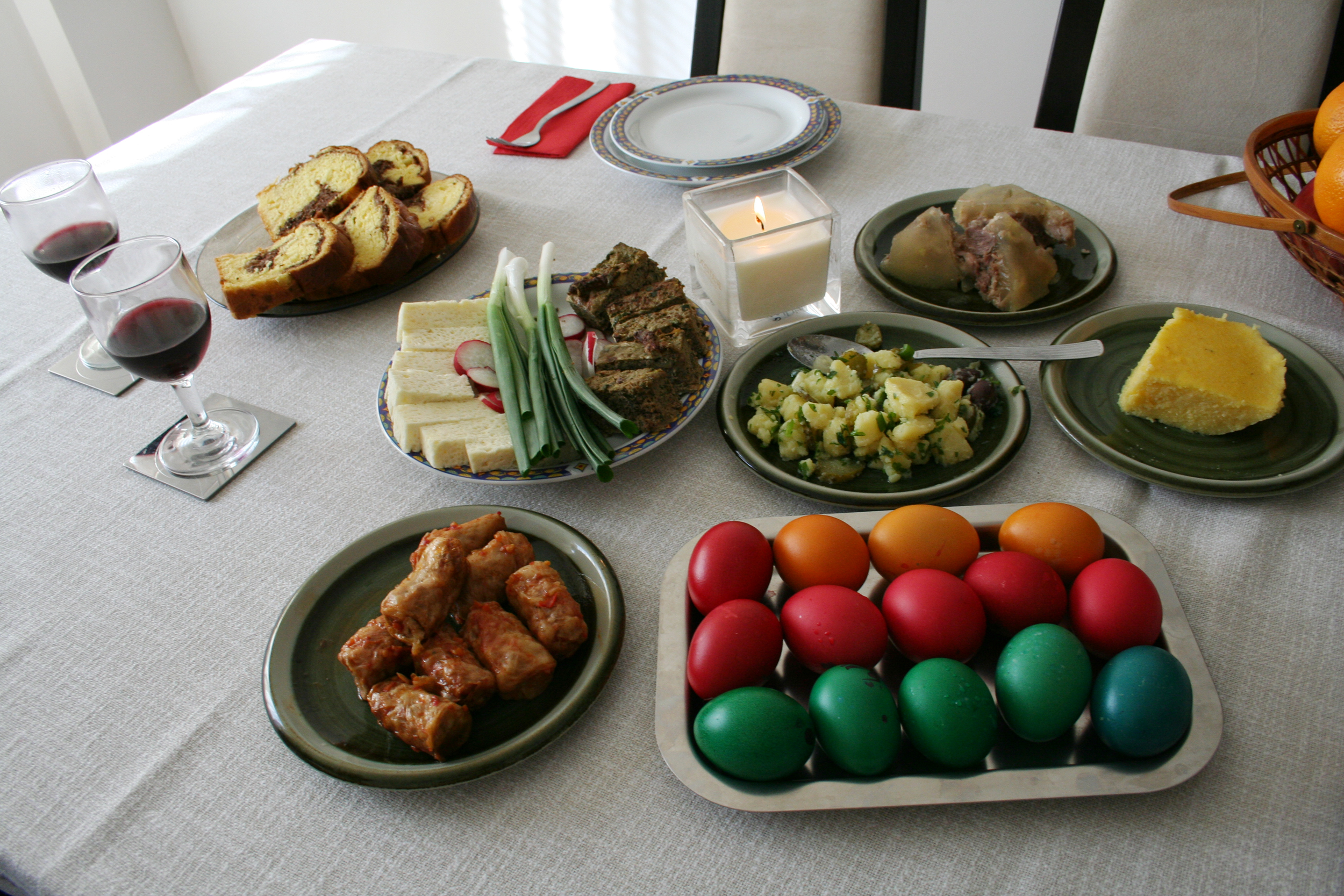
Then we bought pască (good recipe here), which is the Romanian Easter bread, made with cheese, and a kind of Easter bread made with chocolate and raisins that was more like a cake. We also bought some drob de miel, which is a kind of lamb haggis or terrine (recipe and photos further on).
The Easter table should also have a kind of sweet holiday yeast loaf or brioche bread we call cozonac (yummy recipe here, with lots of info). We got some cozonac slices from church, along with some blessed bread dipped in wine. We also received several red eggs from church, both after midnight and after the noon service.
Speaking of church, most Orthodox Christians in Romania attend only the midnight service, and at Christmas, no service at all, unlike Catholics. This may be the first year I didn’t go to church at midnight.
I have helped my mother more than usual this year, and it has taken a toll on me. I realize that’s not an excuse — there are many people who make it to church on midnight despite serious difficulties—, but when I’m very low on energy, as I get sometimes due to a chronic health condition, I don’t feel like myself, and I want to be true to myself. I want to be present rather than have my spirit so slackened that I actually feel like a shell, not to mention shaking with fatigue. So I’ve learned to give myself a break when I’m too tired.
After church, I celebrated Christ’s Resurrection with my mother and brother with an Easter meal that lasted from 1:30 a.m. until 2:30 a.m. on Sunday morning. Of course, as one priest said on TV, Christ had Risen in the small hours of the morning rather than at midnight — this was not like New Year’s Eve, as he put it. But according to tradition, the first religious service for Easter is held on the midnight between Saturday and Easter Sunday.
I thought I should continue the celebrations on Sunday with this article on Easter foods, with some photos and descriptions, since holiday dishes are a big deal in Romania, and people work hard to have all the staples on the table. Well, yes, these days many people also buy some of them from a supermarket, as we did, but in the countryside most people prepare all these foods themselves.
Besides the ones on our Easter table, Easter recipes also include sarmale — stuffed cabbage rolls or stuffed vine leaves (more on this later). Some people also make piftie (aspic or meat jelly), which is technically a Christmas dish, since it’s made traditionally with pork hocks (here’s a good video recipe).
Now, I have to say that eating all these rich foods after eating vegan for 40 days felt rather heavy. I couldn’t fall asleep on Sunday morning until 4:30 a.m. because I’d eaten some boeuf salad and some lamb haggis. So even though I did what nutritionists and doctors recommend on the radio every Christmas and Easter, which is to eat selectively from the Easter foods every time we sit down at the table, I still had a difficult time digesting my meal.
I also had a hard time on Easter Sunday, berating myself that I did some writing (aside from part of this article), but after so many days where I cooked vegan foods and cleaned and prepared Easter foods, I felt like relaxing while doing something I’d put off for many days. But then I felt guilty, because Easter should be about rejoicing in Christ’s Resurrection and celebrating with family. But I did that as well.
Celebrating Jesus’s Resurrection with the “Christ is Risen!” Greeting
On Easter Sunday, we write to friends and family the traditional “Christ is Risen!” message, to which they respond with “Indeed, He is Risen!”
We use the same words when tapping Easter eggs. Speaking of which, did you know that the egg represents Christ’s tomb? In a sense, it is a kind of mandorla, or “almond,” around Him — which is how the Christ of the Resurrection is represented in Christian iconography. Cracking the egg symbolizes Christ’s triumph over death.
We also use the same Paschal greetings when we meet in the street and will do so until Ascension Day, which is celebrated 40 days after Easter.
The Paschal Troparion (or Hymn) that is sung right after midnight on Easter Sunday is the following: “Christ is Risen from the dead, trampling down death by death, and upon those in the tombs bestowing life!” You can hear this chant in Romanian between 16:01 and 16:30 in the video of the midnight service at the Patriarchal Cathedral in Bucharest. The words in Romanian are “Hristos a Înviat din morți, cu moartea pe moarte călcând, și celor din mormânturi viață dăruindu-le.”
An Amazing Anastasis Fresco
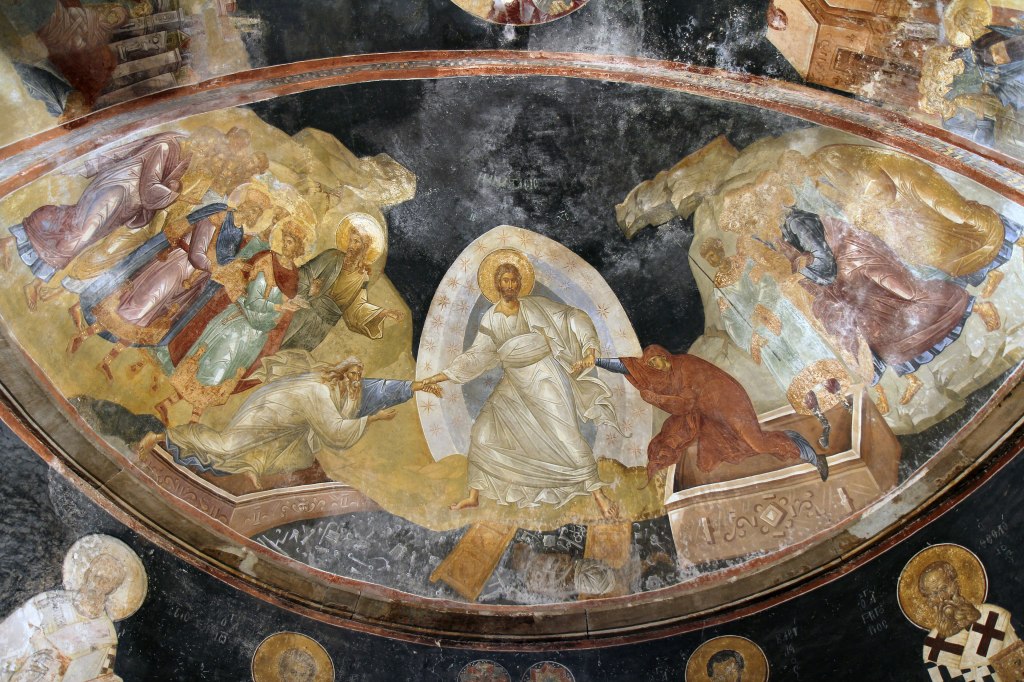
There is a fabulous fresco of Christ’s Anastasis (Resurrection) in a funerary chapel at the Kariye Camii (Kariye Mosque, formerly Chora Church / Church of the Saviour in the Chora Monastery) in Istanbul. It dates back to the Late Byzantine period, to cc. 1310–1320, and it represents Christ’s Descent into Limbo, where he had vanquished Satan, who is shown bound at Christ’s feet, and triumphed over death. It’s famous because there’s an incredible energy to Christ’s figure, shown here pulling Adam and Eve from their graves.
Here’s an image of it.
Back to Easter Foods
The sarmale are stuffed cabbage or vine-leaf rolls that we have kept as a legacy of the centuries in the two main Romanian provinces, Wallachia and Moldavia, which were under the suzerainty of the Ottoman Empire (as vassal states that paid tribute and had the rulers confirmed by the Ottoman sultan).
The name sarmale (as a plural noun; the singular is sarma) comes from the Turkish word sarma, which means “to wrap” or “to roll.” In Turkey, food wrapped in leaves (usually vine leaves) is called sarma, while stuffed vegetables are called dolma. Stuffed vine leaves are known in Greece as dolmades.
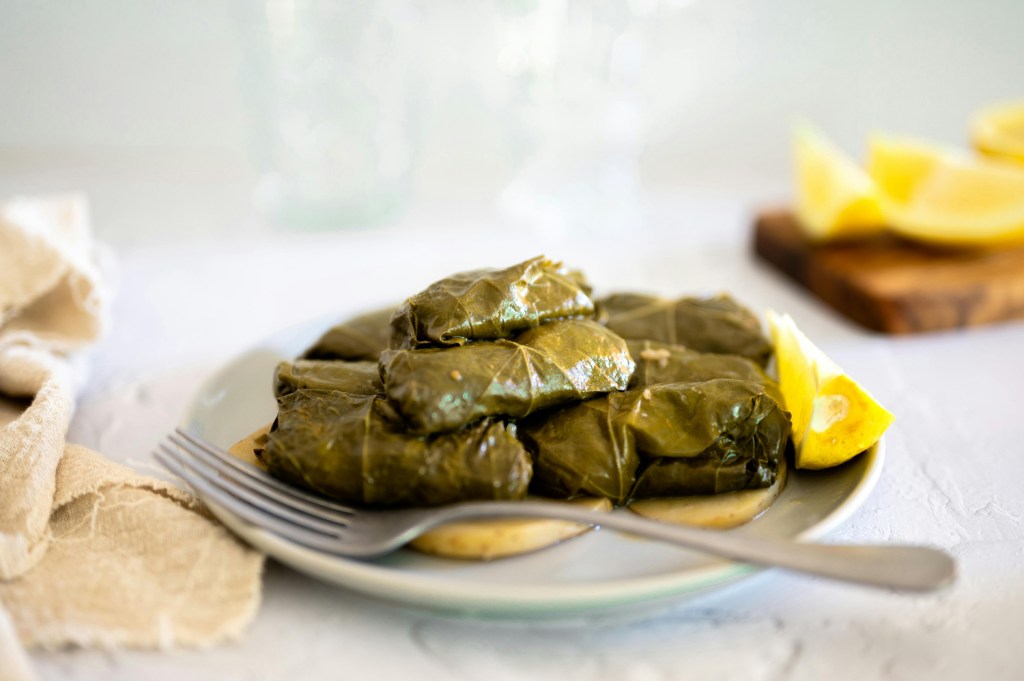
In Romania, the sarmale are done with either pickled cabbage leaves or vine leaves and are usually served with sour cream and hot peppers along with a side dish of mămăligă (polenta). The filling is made with onion, rice, ground meat (usually pork or a mix of pork and beef), smoked bacon, tomato juice, parsley, dill, thyme, and salt and pepper. People in Transylvania also add paprika, which is an influence from Hungary. Here’s a good sarmale recipe.
The drob de miel / Romanian lamb haggis is made with lamb offal (liver, heart, lungs, and kidneys), green onions, green garlic, parsley, and dill, mixed with eggs and seasoned with salt and pepper. You can also add meat (lamb, pork, or chicken), and many people do so because too much offal tends to be hard to digest and also includes too much vitamin A for the feaster’s own liver all at once. Romanian lamb haggis also has a row of eggs in the middle, sometimes. It’s baked in lamb caul because it’s very crumbly, and it would be hard to slice otherwise. It’s served with a teaspoon of mustard, and it goes well with tomatoes. Here’s a good video recipe for drob de miel, though it’s actually lamb haggis, not lamb tripe, as it’s called in the video.
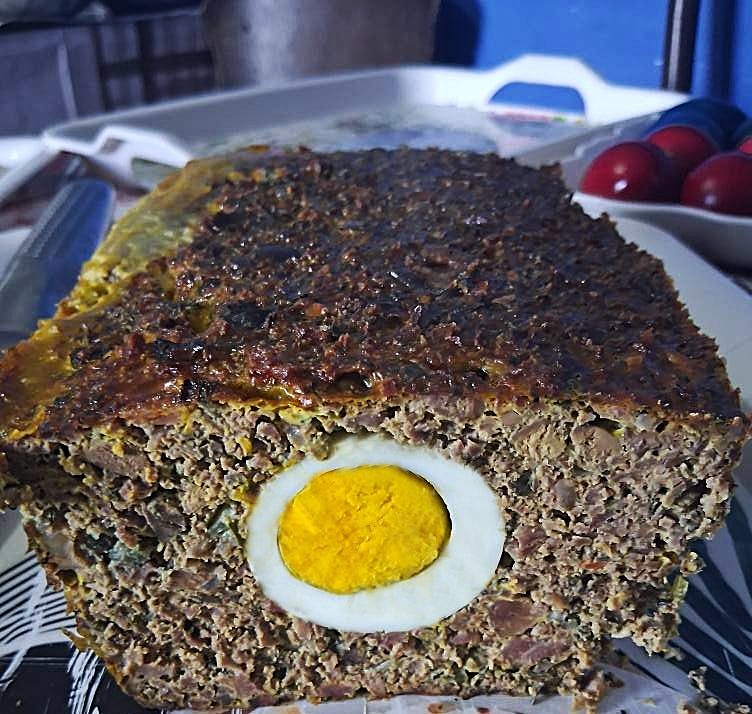
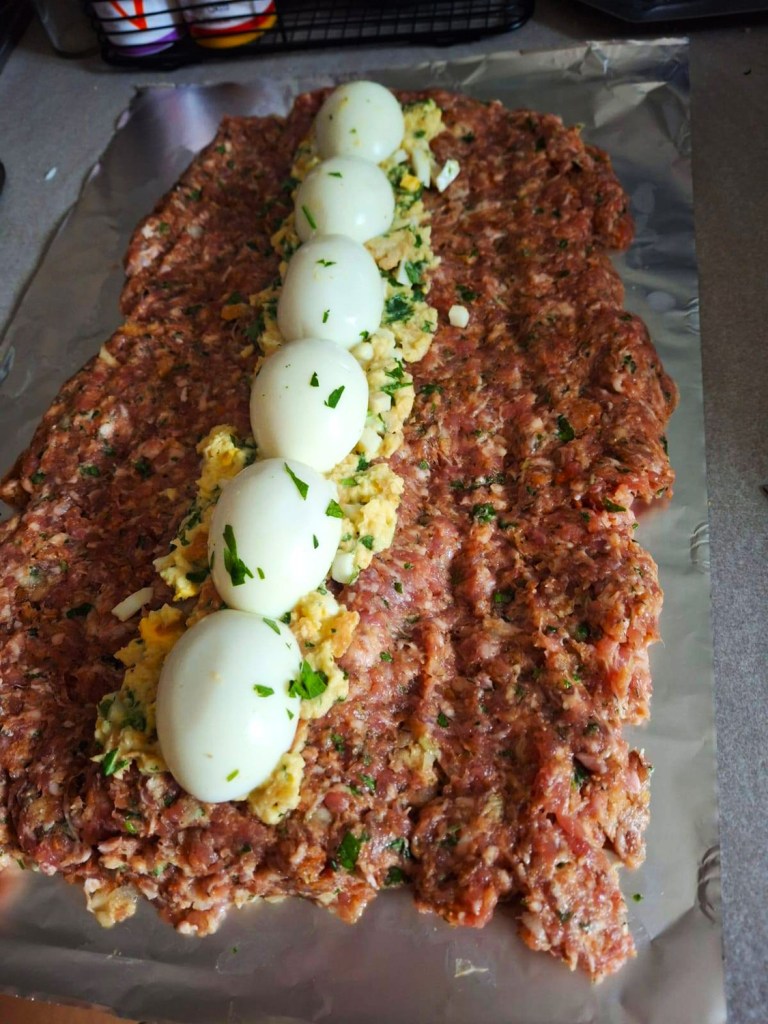
Along with sarmale and drob de miel, the third important Romanian savory Easter dish is boeuf salad.
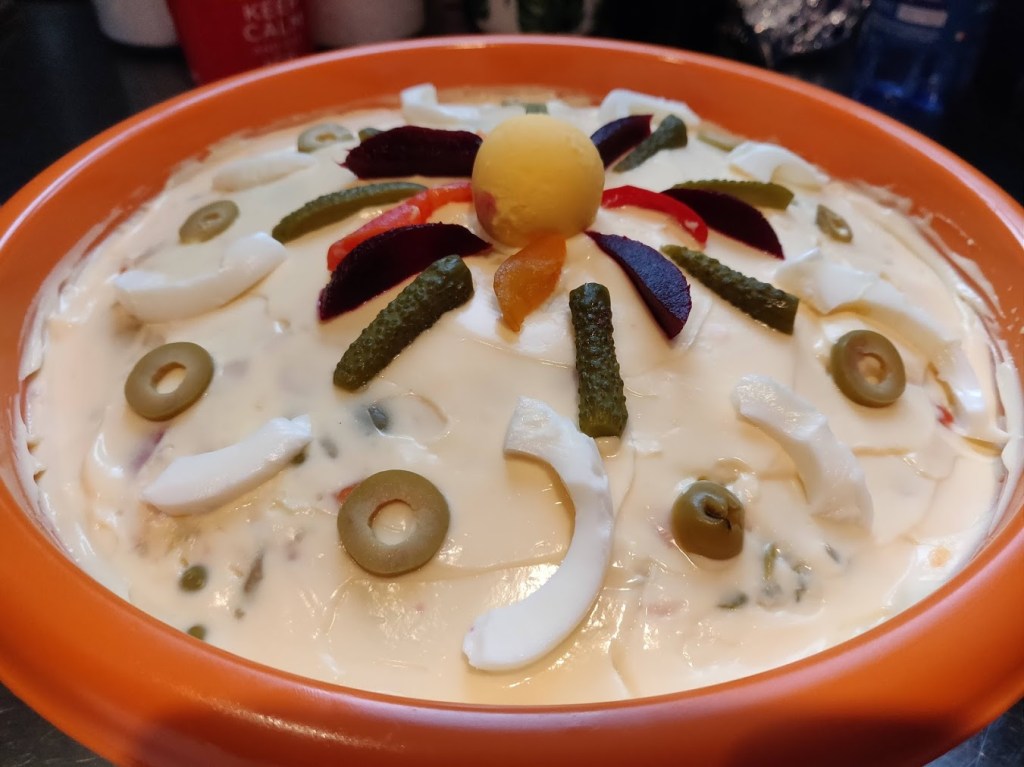
The boeuf salad is made by first cutting up the meat from beef or poultry soup, and then the root vegetables used in that soup — carrots, celery root, and parsley or parsnip root. To that we add diced potatoes, boiled whole and then diced, and diced pickled cucumbers. Some people also add pickled peppers. We mix all of that with homemade mayonnaise (we make ours with olive oil and use mustard as well) and then season the salad with salt and pepper. Most people decorate this salad with vegetables on top of a layer of mayo. Here’s a nice video recipe for boeuf salad.
Then we have cozonac / sweet holiday yeast loaf, slices of which you can see in the first image. It’s usually made with either a filling of cocoa and ground walnuts or with Turkish delight — or with a mix of cocoa and Turkish delight. The dough is made with flour, yeast, eggs, sugar, butter, milk, lemon zest, salt, and vanilla essence, and the result is super fluffy and delicious. The process of making cozonac is not easy, but this recipe, rightly called “My Perfect Cozonac Recipe,” can help a lot.
Now that you’ve tasted these dishes in your imagination, let me say that we have three days of Easter — just like we also have three days of Christmas — and so it makes sense to have all this food ready for the many meal occasions.
In terms of drinks, people do indulge in all sorts of alcoholic drinks, but I’d say it’s important to have red wine as well, to symbolize the blood of Jesus, just like the red eggs. And yes, eggs can be colorful too.
Decorated Easter Eggs
Easter eggs are often dyed with a leaf and inside a nylon stocking, which will give them a nice leaf design.
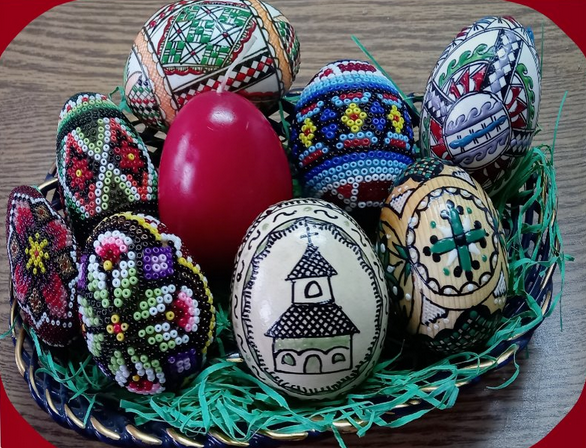
Folk artists also paint empty eggs with wax. They are called ouă încondeiate. You can keep the colored wax after you’re done decorating if you don’t use other dyes for the whole of the egg, or you can melt the wax and clean it off the egg after bathing the latter in different colors. Here’s a nice video.
And then some artists decorate (wooden) eggs with beads.
That concludes my article about our Easter feast here in Romania. I hope you’ve enjoyed it!
Thank you for reading! As always, pins and shares are much appreciated!
To a happier, healthier life,
Mira

