

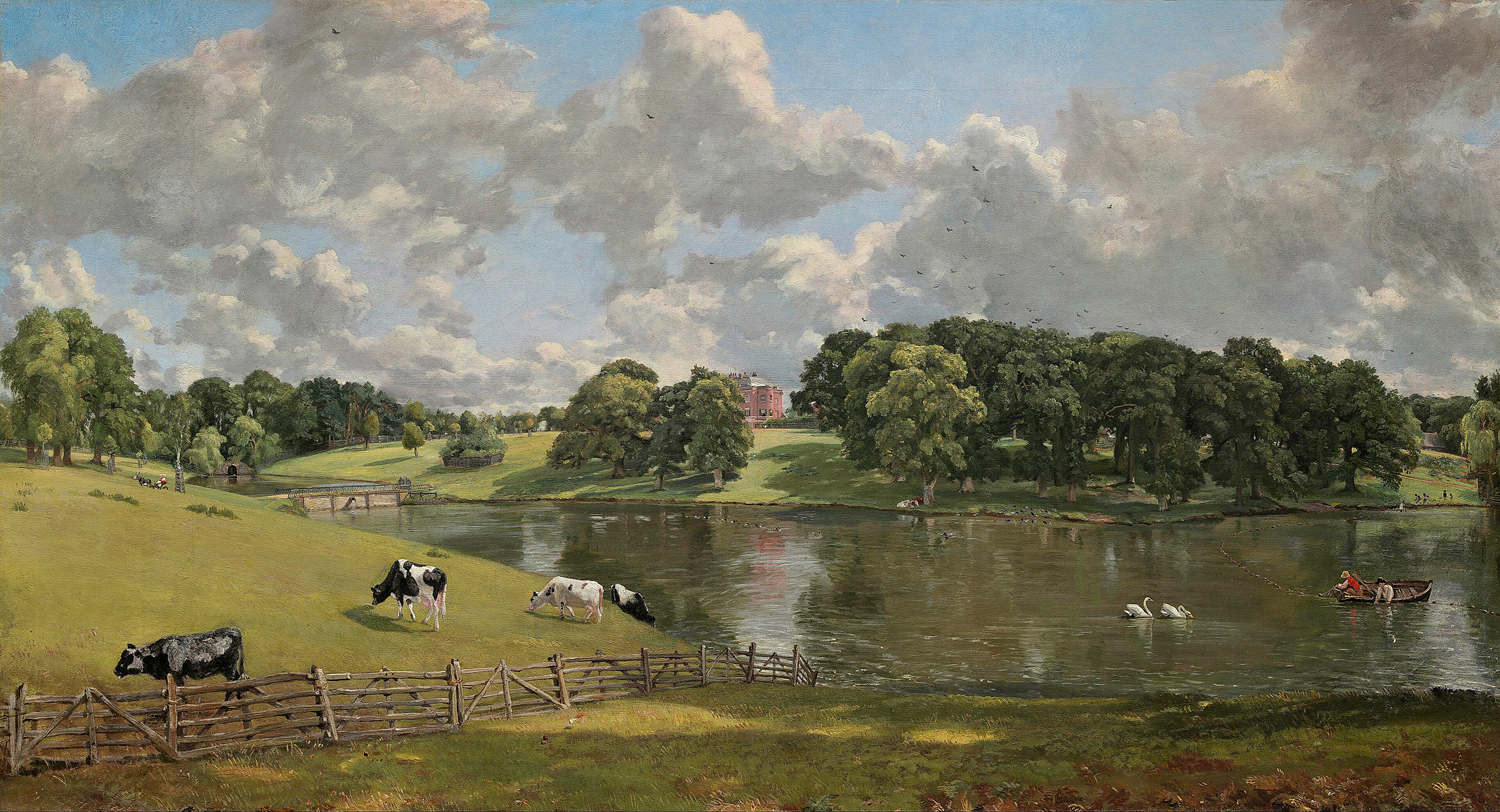
National Gallery of Art, Washington, D.C.
(Image in public domain on Wikimedia Commons, adjusted a little by the author.)
Clare Leslie Hall’s bestselling 2025 novel was a joy to read — it was not only bittersweet, but also compelling with the force of real love stories (very few spoilers)
Book review originally posted in Counter Arts on Medium on May 28, 2026
I recently read a statistic about how, over the past decade, popular books have become, on average, 51.5 pages shorter. This data was based on New York Times weekly lists encompassing more than 3,000 bestsellers. In ten years, the average length of these books has shrunk from 437.5 pages to 386 pages.
Clare Leslie Hall’s novel has 303 pages, so even less than the average book from that survey, but it packs the punch of a much heftier book. Though it had less space for details than other novels, the ones that were included were very evocative, just like in Florence Knapp’s novel The Names, which also includes a lot of story in rather few words (three threads woven into one book).
At the heart of Broken Country is a love triangle. The story is set in 1955, 1968, and the present. In 1955, Beth is charmed by beautiful Gabriel, a neighbor who lives in a big manor close to her home. In 1968, Beth is married to Frank, a farmer, but she still has feelings for Gabriel, which she decides to act upon. And in the present, we have a trial for murder in a courtroom in London involving all three protagonists.
I have a thing for novels of temptation, because moral lapses in romantic relationships are so common in our lives, and as Carol Fitzgerald of the Bookreporter said when she interviewed Clare Leslie Hall, whereas in one’s twenties and early thirties everything may seem perfect in many couples, later on in life, most relationships begin to falter. So while some readers refuse to contemplate novels about cheating, it is, I feel, only being real about life to accept that people are imperfect and prone to temptation, and that even very loyal partners may give in to some of their weaknesses and have an affair. I think that couples that don’t experience cheating are very lucky, indeed. I do know such couples, good friends of mine who are true soulmates, and they are wonderful to behold. But many of the rest of us know that seduction can make a mess of even good, strong relationships.
Desire as part of adultery is a very complex beast. It’s not just a sexual urge, though for many it may be mostly that, at least in the beginning. But, as the author said, commenting on the actions of her female protagonist, Beth’s desire for Gabriel was part nostalgia for their old love affair and part nostalgia for an older version of herself, one that wanted to go to Oxford, like Gabriel, to study literature, and who might have then decided to lead a very different life. Not that Beth is unhappy with Frank and the life they’ve created together. She loves her husband, and she loves being a farmer’s wife and caring for Frank and his brother Jimmy.
The story develops from here, and the reader can imagine the land, with its birds, lambs, and expanses of green, punctuated by a few old trees. We can visualize Beth’s son, Bobby, helping ewes give birth to their little lambs, pulling the legs of the beautiful small creatures when he’s only five years old, and we are there with Beth and Gabriel as they picnic by a lake. We can also see the villagers gather at the pub on Friday nights — well, most of them, since someone like Gabriel is not particularly welcome.
The novel is very cinematic, and it has, indeed, been optioned for film. It also made Reese Witherspoon’s book club list shortly after publication, which helped it garner over a million readers by the time my copy was printed in 2026.
The author mentioned in interviews that she spent four years with the book, writing twenty drafts (if I remember correctly) and researching farm life and courtroom dynamics. The story ended up being narrated by Beth, but at first, the author wrote sections in Frank’s and Gabriel’s voices as well. While she eventually decided against the latter, she did spend time trying to better understand these two love interests of Beth’s, and that shows. The two men, along with the other characters, walk across the stage of the book as realistic figures rather than cardboard portraits with qualities scribbled on them. I could almost feel their solidity as bodies, especially as the author adds small details about them moving through space, which some novelists forget to really pay attention to, aside from describing small gestures. I can see Frank, for instance, leaping over fences in one supple motion, as the author intended. I can see Bobby crouched at the back of an ewe helping the sweet animal deliver its baby. And I can poignantly imagine Beth carrying dishes to the kitchen in Gabriel’s home, after her dinner with his parents, only to be told by his mother that that is not how things are done in their household.
Just like the characters, the scenes are very vivid, even as the author refrains from long descriptions. She only homes in on the knot of emotion each character experiences and inserts a few telling details of their whereabouts, making the most of those emotions. And yet with all this sparseness, the book blooms, coming to life better than many older novels that cram descriptions and dialogues but fail to milk them for all their potential. (I’m reading such a book right now. I won’t name it here.)
I’m glad I picked up this book, and I have to say I love Leslie Hall’s mien as well, as it comes across in interviews. I will definitely read more by this author.
I hope you enjoy this book. Though relatively brief and sparsely told, Broken Country is a rich narrative that makes room for tragedy, hope, and personal growth in an inventive way that’s both realistic and beautifully novelistic.
I will certainly make sure my copy makes the rounds among my friends.
*
Thank you for reading! As always, pins and shares are much appreciated!
And if you liked this piece, you might also be interested in these three other blog posts:
‘The Wedding People’, A Heartwarming Dark Comedy
Lily King, ‘Heart the Lover’, A Story of Love in Young and Older Age
OpenAI Model Writes Literary Metafiction on Grief and AI. An Analysis
To a happier, healthier life,
Mira


1 Comment