



A sort of humanistic disquisition based on the second part of Viktor E. Frankl’s book Man’s Search for Meaning
Essay originally posted in Counter Arts on Medium on June 8, 2026
In the forties, neurologist and (later to become) psychiatrist Viktor E. Frankl went through four concentration camps. He recounts some of his experiences there in his memoir Man’s Search for Meaning, adding a second part about logotherapy, a psychological theory and psychotherapeutic approach he developed.
Logotherapy is an existential therapy. Its name means “healing through meaning,” and, indeed, it aims to help the patient embrace a certain “will to meaning” rather than accept, along with Freud, that the pleasure principle, above all, guides Eros, our life instincts. (Later on, Freud also added Thanatos, the death drive, encompassing other unconscious desires that motivate human behavior.)
With his will to meaning, Frankl combats hedonism, which holds that people instinctively seek pleasure and avoid pain, as well as utilitarianism, which, as a philosophical theory based on hedonism, argues that we should aim to maximize happiness and minimize pain for most people. At first, I thought Frankl would agree with utilitarianism, except that he was against going for happiness — and success, for that matter — head-on.
Disclaimer: The information on This Blog is intended for general informational and educational purposes only—not as medical advice. I am not a medical or health practitioner, and no part of This Blog, or the articles, websites, and products I mention and link to on This Blog, is intended as professional medical or health advice, and should not be considered as such. Here are my Full Terms and Conditions.
But then I realized that pleasure is tricky, because excessive pleasure leads to lassitude, as Schopenhauer noted in his Studies in Pessimism: “men would either die of boredom or hang themselves” from too much pleasure. Much as pleasure and happiness help us in our personal and work lives, as positive psychologists have demonstrated, without enough pain and tension, we wouldn’t challenge ourselves. Without fighting and overcoming issues in our personal lives and in society that are worth changing, we wouldn’t grow as people.
Perhaps, as the Stoic Epicurus noted, moderation is key. A simple life with only natural necessities met — as opposed to luxuries or artificial desires such as a quest for power, which can induce anxiety — is probably the best bet. It’s important to mention here that Epicurus treated pleasure as the absence of suffering. Rather than viewing pleasure as the ultimate good, Epicurus gave that treatment to ataraxia (which is essentially freedom from anxiety, tranquility; ataraxia comes from a, “without” + taraxis, “turmoil”) and aponia (the absence of physical pain, from a, “without” + ponos, “pain, toil, suffering”).
Nietzsche, like many others, disagreed with Epicurus. The famous modern German philosopher believed that life is best enjoyed when “live[d] dangerously.” That didn’t serve him too well, however, as he focused too much on his mind rather than on a balanced life, and not only suffered a complete mental breakdown at forty-four, but lived through many years with awful migraines and gastrointestinal distress. It’s my personal opinion that his fate may have been averted if he had only given his body more attention and care.
A little anxiety, or good stress, however, seems to be beneficial. Frankl says that, rather than abiding in a passive equilibrium, human beings fare best moved by some tension — tension that comes about as we take stock of the goals we have fulfilled and what we still plan to achieve.
Frankl, in fact, argues that the will to meaning is more powerful in all of us than our instincts. He mentions some surveys where the vast majority of respondents said that the most important thing in their lives is the pursuit of meaning. The author then argues that it’s this quest for a purpose that we should embark on rather than the “pursuit of happiness,” since happiness is only an aftereffect of finding meaning.
But, Frankl says, in the twentieth century, with the fading of many traditional cultures, many people have become disoriented. They don’t find their ground in community traditions, and their instincts don’t guide them toward goals that would speak to them, so they fall into what Frank calls an existential vacuum. Many of them suffer from addictions, which they feel they can’t escape. William James’s pragmatism springs to mind in these cases, and his assertion “My first act of free will shall be to believe in free will.” He would agree with Frankl that the meaning of life is not something to be found, after all, but something to be created through our actions.
Here Aristotle would beg to differ, to say that intellectual contemplation (theoria) is the greatest goal and pleasure. It’s most likely both action and contemplation when it comes to creating meaning and ourselves, much as Frankl doesn’t believe in overanalyzing our lives. In fact, he says we should live as if we were living a second time and are about to make the same mistakes we once did, which I take to mean that we should change things in passing, turning the recall of our past into an impetus for change. But why assume we acted wrongly the first time?
In his book Every Time I Find the Meaning of Life, They Change It, Daniel Klein takes Frankl’s exhortation to mean that rather of thinking in general about life — or, as Adam Phillips, quoted by Klein, would say, fantasizing about unlived lives — , we should base our search for a better way to live on examining the first life, focusing on its concrete reality — though, Frankl would add, not overdoing it, since time is precious. So yes, there’s much worth in examining our lives — Socrates is famously supposed to have said that “The unexamined life is not worth living” — , but it’s more important to actively change our perspective and actions. Spending a great deal of time in therapy is not Frankl’s approach, as he himself avers.
A certain amount of reflection, however, is welcome, as any philosopher would naturally agree. Yet some people find it hard to focus on anything that would redeem their present. This is the existential vacuum that Frankl talks about, and the way out of it, the author says, is through self-transcendence. Rather than overanalyzing our inner life, the author argues that we should try to open ourselves to people and things other than ourselves in our actions, experiences, and paths through suffering.
High-flyers who cherish other people, Rob Yeung writes in E if for Exceptional: The New Science of Success, have better interpersonal skills, which, incidentally, help them be more persuasive when they need it. They also have an easier time connecting with people and behaving in a socially responsible way when it comes to work relationships or doing things for others and the natural environment.
Cherishing other people is also about establishing and developing friendships, of course. Here’s how highly Montaigne spoke of true friendships in his Essays: “In the friendship I speak of, they mix and work themselves into one piece, with so universal a mixture, that there is no more sign of the seam by which they were first conjoined.” Epicurus also deeply appreciated friendship. He is quoted in the Principal Doctrines of Epicureanism as saying that “Of all the means which are procured by wisdom to ensure happiness throughout the whole of life, by far the most important is the acquisition of friends.” He went on to note in that collection and in another Epicurean anthology, The Vatican Sayings, that friends provide emotional support against anxiety, and that they do so even when they are not actively helping. Simply knowing that they are there for us promotes tranquility.
Frankl talks of friends repeatedly in his book, saying how inmates looked out not only for themselves but also for each other. He recalls an incident when the guards wanted to punish one of them where all of them decided to go even hungrier to bed that night in support for that inmate. And yet, he says, it was hard to go through years in those concentration camps without sometimes betraying one’s friends, for survival also meant the temporary hardening of one’s heart. I found this incredibly sad.
For his part, when he talks of experiencing other people and the world in Man’s Search for Meaning, Frankl refers to what amounts to moral and aesthetic Platonic Ideals such as the Good and the Beautiful. And when it comes to our encounters with other human beings, Frankl writes about how it is only through love that we can come to find somebody’s truth and beauty. By doing that, we can also help the other person become a better person.
As for going through suffering, that can provide meaning too, often by focusing on our love for other people. All throughout his time in concentration camps, Frankl brought to mind the face of his wife. He knew the odds were against his wife making it alive, but he found succor in thinking of her with love nevertheless. His wife, just like his parents and his brother, lost her life in the camps.
What kept Frankl going were thoughts of his dear ones and the little he could do for them and other inmates in the camps. An afterword to the book, by William J. Winslade, tells us Frankl could help his father’s passage before the latter’s death when he sourced some morphine for him in the camp where they were both incarcerated. He had refused to leave his parents behind in 1940, when he could have emigrated to America, and they were all deported to the Theresienstadt Ghetto in September 1942.
Frankl was also working on a manuscript on logotherapy when he was imprisoned, and the will to see it through and help others with it was also something that gave him a reason to live. When he first published his manuscript in 1945, he didn’t even want to add his name to it. (His friends’ entreaties prevailed.)
I like that logotherapy looks to the future with hope and treats life’s transience with optimism. And it does so because of a positive perspective on the past as well. According to Frankl, the past is not something “payé, balayé, oublié” (“paid for, swept away, forgotten”), as Edith Piaf sings, but rather a world full of realized possibilities and goals achieved — something to be proud of and something that can give us strength when meeting the present, for we have learned many lessons and endured “bravely,” as Frankl points out, much suffering.
But how to square this with the horrible, senseless suffering of the death camps? His triumph is, indeed, the triumph of humanity against some of the most horrid viciousness, but, from what I’ve read, while some people who made it out alive from concentration camps reacted to their personal and communal tragedy like Frankl, others managed to continue to survive precisely by trying to avoid thinking of their experiences there. Some of them, developing Alzheimer’s, became haunted in their old age, in nursing homes, when it was time to have a shower. Not everyone could endure those horrors “bravely” like Frankl, and I say that aware that Frankl’s psychotherapeutic approach has helped and continues to help many people.
In a 1984 postscript, Frankl talks about a “tragic optimism.” Tragic is what one should expect when dealing with the trio of pain, guilt, and death. As for optimism, he admits that such an outlook— much like faith and love — can’t be summoned at will. On the other hand, he says, human beings have the capacity to make something positive of tragedy by focusing on the triumph of the human spirit, changing for the better as a result of feelings of guilt, and becoming more active and more responsible in the face of life’s transience.
You can’t focus on happiness with “hyper-intention,” he says, because that’s like a man focusing on his sexual prowess during a sexual act, but you can try to find the latent meaning in a certain situation. But what if some people can see no meaning in certain situations? Or no solutions? Frankl, who worked with suicidal patients at a hospital in Vienna, told them and tells his readers that perhaps, along the line, solutions will become apparent and life will begin to hold meaning. Even if this does not happen for everyone, there is a chance, in everyone’s life, that it may happen — so everyone should hold out hope, he offers.
I should mention here that he found a second love in Eleonore Schwindt, whom he married in 1947. That same year, Eleonore gave birth to a daughter, whom they named Gabriele.
As his book Man’s Search for Meaning was drafted in the forties in the dire circumstances of the Holocaust, where 1.5 million children were killed, not to mention that his first wife Tilly had to abort their child even before they were detained (Jewish women in Austria were then prohibited from giving birth), it’s understandable that Frankl doesn’t talk here about his desire for children and the role they would play in adding more meaning to his life. He could have included some comments later, but he didn’t.
He does mention, however, treating patients who have lost children, including an Eastern European rabbi who lost all his six children and his first wife in the Holocaust. Hard to know what to say in this situation, but Frankl, who was a man of faith talking to an Orthodox rabbi who feared he was too sinful to join his sons and daughters in heaven, told the latter that perhaps his plight could help him become worthy for that feat. So while the book is not religious, Frankl’s outlook definitely is.
While not trumpeting my faith on every occasion, I am spiritual too, but I’ve lived a long life before I’ve began to more consciously embrace my religion as an Orthodox Christian to realize that Frankl’s words of consolation to that rabbi may sound horrendous to some people. There may not be any perspective in which the death of six children can make sense, some people may say.
I am also aware that it is exactly such an example that can lead people to say that life has no meaning, that it is absurd. It has certainly pushed many religious Jewish people who have suffered in the Holocaust tentatively away from their faith. But at the same time, others, like Frankl, have embraced their faith more closely for it.
What’s interesting here and relevant to a search for meaning is that while science hasn’t, in fact, found a God Gene, despite a 2004 book with that title purporting otherwise, it has managed to show that some of us are genetically predisposed to have more faith. Research on twins, including a 2005 study from the University of Minnesota on 273 pairs of twin US men, 169 identical and 104 fraternal, confirms that religiosity is partially influenced by genes. Identical twins are more aligned in their religious beliefs and behaviors than fraternal twins.
So while there’s a lot that can be said about socialization that can both draw someone to religion for the long term or turn that person against it as an adult, there’s a lot to say about a person’s genetic makeup as well — which means that there’s an extra wrench in the works when approaching the question of searching for one’s life’s purpose or creating meaning. Maybe the easiest way — and I say this not completely tongue-in-cheek — is to partner with someone who is rather optimistic and open to spirituality. In my case, my mother’s example, so full of wonder at the world and deeply yet softly religious, changed me in many ways in recent years, much as I’d been spiritual for a long time previously.
Back to Frankl’s comments regarding people experiencing an existential vacuum, he notes that, along with depression and addiction, another marker of those in such a frame of mind is aggression. He has a remedy for this as well: communal work, a purpose beyond themselves that makes them a part of a community. He mentions an experiment by Carolyn Wood Sherif where groups of boy scouts were first turned against each other and then asked to cooperate to bring a carriage with food to their camp, through the mud. Their aggression abated right away.
This suggests that meaning can be extracted from individual actions rather than from looking at the whole movie of a life, to use a metaphor employed by Frankl. But then, if understood frame by frame, the movie begins to make sense too, he says.
Still, some people seem to have trouble perceiving meaning in their lives. Many coaches these days believe that stories by successful people can offer inspiration, which is why there are many such books on the market. Frankl, too, refers to psychologist Charlotte Bühler, who offered the solution of studying such accomplished people as the only one available to readers who are having trouble making sense of their lives, which is to say, finding optimism and a reason to live.
Only, as Yeung notes, top professionals can seldom point out all the specific elements that made them successful, which is why only interviewing them, as many authors do, is not always useful for the reader. Yeung, however, picks apart some of their traits, skills, and decisions, and distills and leverages them into a book that makes for instructive reading. The problem is that the vast majority of people are so swamped by the minutiae of their daily lives that they can’t find the time, energy, or monetary resources to upend all that and set their lives on a different course.
But the busyness of people is not the only reason people don’t feel inspired by top professionals, much as many people like to watch sports, for instance. No, it’s simply that people want to look up to others who are closer to their way of life. As Frankl says, people tend to be more impressed by members in our communities who work hard and reap the fruits of their efforts than by high achievers they read about.
In fact, however, Frankl believes that it’s in all of us to reorient ourselves toward making the most of any given situation. He points again to the three tenets of logotherapy, the three ways someone may come to meaning in their life. The first one is through work or other actions. The second, through loving interactions and experiences. And the third is what psychoanalysis would term the sublimation of suffering, rerouting painful energy onto a beneficial course, and changing oneself in the process.
Frankl, like many psychologists, gives the argument of a quadriplegic, Jerry Long, to show that it’s possible to overcome even such predicaments with the right frame of mind. In 1984, Jerry Long took courses at a community college via telephone, communicating with his fellow students during class activities. He then spent most of his time reading, writing, and watching TV. In a letter to Frankl, he said that the diving accident that left him a quadriplegic made him able to experience a lot of personal growth, and that he was interested in studying psychology in order to help others.
I don’t know Jerry Long’s personal situation, but, unfortunately, there are many instances where the families of people similarly injured do not have the resources to properly care for them. So, with all due respect for both Frankl and Long, this argumentum ad hominem works only to a point.
Then there are others who fare much better physically but who may be completely overwhelmed by so many things they cannot help change for the better in their communities and the world. They may not live in an existential vacuum, but they may experience, indeed, existential despair.
On the other hand, for many people, it takes a difficult illness to better appreciate life and all the meanings it can offer every single moment.
Yet some people are inured to that, just as they are inured to faith in a divinity. What’s left then is love, affection, and empathy. As director Cristian Mungiu said in an interview with Ethan Hawke (about Mungiu’s film R.M.N.), as long as there’s affection for one’s son, for one’s lover, there’s hope for the world.
Love, however, grows harder in some people. If they haven’t experienced much of it in their childhood, it may be difficult for them to access it, give it to others in a beneficial form, or make it grow into something beautiful.
Then there’s the online world, which bets a great deal on feeding our dopamine reward system, fostering addictive behaviors, until people become unaware that they spend too many hours online chasing the pleasure of dopamine hits. Relationships require work and wisdom, and that work and wisdom, in turn, require time spent in face-to-face interactions — and time with ourselves, musing over what happens to us the way we also do when we read a book and pause between installments to spend some productive time with the characters, pondering what we’ve just read.
I fear that, just like doctors who rely on AI to give them readymade diagnoses, younger people may lean on AI platforms to tell them not only summaries of books or info about the world, but also how to feel and what to think. This also leads me back to Cristian Mungiu’s interview, where he said that democracy is greatly reduced if the people who vote lose the ability to think critically and form opinions for themselves. It doesn’t help democracy at all if they only learn to parrot in public the views of one camp or another, and, in private, fall prey to instincts rather than engage in critical thinking. With his films, Mungiu fosters the latter in an artistically accomplished way. He helps people see reality better by pointing his lens at various societal mores and ills and at various attitudes and behaviors people exhibit as individuals and as herds.
We should be able to offer people the kind of education that sharpens critical thinking, Mungiu said in that interview, because the latter has the power to make us more humane. I’d add that, among other things, we need the kind of thinking exercises and learning experiences that help us define our values. Once we have a set of values, we pretty much know what we want to live for. Next, we only have to look for ways to align ourselves to those values, be they goodness, truth, beauty, fairness, justice, humaneness, and so on. In Yeung’s view, this amounts to visioning: when they set their goals, top performers keep in mind a vision of themselves and their life rather than only material objectives.
Speaking of humaneness and visioning, the fact that AI bots have become so adept at mimicking human emotion and empathy is very disheartening. Without face-to-face interaction, without the long phone calls we Gen Xers and Millennials still value, it will be hard for Gen Zers and Gen Alpha to really pause and spend time not only with other people, but with their thoughts as well.
At least they listen to music. According to Dio Chrysostom, in ancient Greece, “everything [was] done to music,” not only dancing — and there was plenty of dancing; Socrates was known to indulge a lot, believing it to be good exercise — and gym exercises, but also trials in the courtroom and medical examinations. There are plenty of depictions on ancient Greek vases of people playing musical instruments, such as the double-reeded woodwind aulos. And then people sang as they worked. Pretty much the same is true of the Romans, who included music not only in their famous banquets but also in much of their daily lives.
It’s important to pause here and note that music in ancient Greece and Rome (and other ancient cultures) accompanied communal activities. We have lost much of that. Up until the twentieth century and continuing in some parts of the country here in Romania, especially in Maramureș, women would participate in spinning bees and other craft get-togethers — they would meet to spin wool by hand and to weave textiles on looms, for instance — and together they would sing songs, share news, and tell stories.
As it happens, there is plenty of communication these days, but not in the right places. While people interact less and less in person, there is much verbiage lately between internet users and AI bots, because the latter often end their comments with a question, so that the “dialogue” can continue. As Romanian philosopher and art historian Andrei Pleșu noted on one occasion at a book fair, we live in an age where there’s an excess of words but where we have forgotten to observe and to be present.
Speaking of observing, have you taken the time to really notice the dandelion’s life cycle? I have, which is why I was befuddled by a video done with AI which shows the flower closing and immediately opening as a puff ball. What happens, in fact, is that as the seeds mature and their parachutes grow, the yellow petals of the flowers are pushed forth through the top of the now closed flower head, as in this older popular time-lapse video showing a dandelion flower turning to seed head.
As for being present, I’ve been thinking about how, among other things, we have forgotten to give ourselves the chance to experience flow states. Flow states, as first described by psychologist Mihaly Csikszentmihalyi and by many others after him, are experiences of deep concentration when we are fully immersed in an activity and lose sense of both our ego’s clamoring for attention and the passage of time.
Importantly, as Yeung emphasizes, flow states boost our self-confidence. We are in the moment, fully present, doing things and getting better at them, and as a result, once the activity concludes, we experience a rush of excitement about what we’ve experienced and feel really good in our skin and in the world. This sounds to me like flow states hold one of the keys to the meaning of life. We should be spending time and possibly even making money doing activities that allow us to challenge ourselves while feeling in control and buzzing with good stress, and to grow in a way that aligns with our talents and interests. A way that helps us stay true to ourselves, which is very important, because, as Yeung notes, it is authenticity that makes us feel alive.
And as the ancient philosophers told us, we should remember that the quest for the meaning of life may not start with action but with a state of wonder at the beauties present in each moment, whether they reside in a flower or a butterfly, the sun rising over a hill, a person’s body offering warmth or perhaps just a delicate gesture to another, an electrifying kiss, or a kind action, such as one offering compassion to another when one’s self is deeply hurting too.
Having awe at the world is what Yeung, too, mentions as one of the hallmarks of high-flyers. Wondering about things helps their creativity see possibilities they may take advantage of. It also leads to their cherishing the goodness and beauty in other human beings, in the latter’s past and present accomplishments, and in the natural environment.
In my optimistic moments regarding AI, I like to think that the current age of the bots will soon be replaced by one where human beings take back their right to wonder, and where these AI bots will be used more to help people find other people, as the telephone did in Jerry Long’s case, rather than pretend to have soulful dialogues with them. And despite the glitch in that AI-generated video about dandelions, I also expect — this has been happening for a while now when it comes to identifying species in the natural world — for AI to put us more in touch with the marvels of the world, and to help us appreciate them better. Just today, I was enjoying the scent of a tree’s blossoms and was thinking that I should take a photo to identify that species. I was in a hurry and didn’t do it, but it’s the type of thinking that’s common now due to AI apps like LeafSnap and Google Lens.
Where AI has serious drawbacks for now is in intimate conversations. It’s easy for younger people to accept these “dialogues” because they grew up with blogs and social media, which is to say, with online communication. It would have been very strange for human beings to jump directly from a world of telephones and TV into one with communication with AI bots online.
Another thing also happened, which is that with time and TV we’ve grown removed from things like Plato’s Dialogues — from the kind of conversations that pulls forth thoughts from our wooly heads for us to better measure our opinions before switching to more critical thinking — before embracing another opinion, and then weighing and discarding it, and so on, as we continue on our way to an important thought or two closer to the truth.
And then the internet came along, and we’ve become used to spending time online and experiencing various emotions along a newer breed of “pen pals,” which first wrote blog posts and later turned to other social media that offered increasingly fragmentary communication. Later on, Gen Zers and Gen Alpha entered the scene of Instagram, Twitter/X, and TikTok, having their thoughts and emotions influenced in mountains of minutes by people who are more strangers to them than bloggers were for Millennials and Gen Xers. So a soulful conversation with a bot that’s good at faking emotions? It may appear better than other readily available options: better than social media, and quite an improvement over a harried partner with social media-shattered attention.
For now, I like that AI responses come with a disclaimer, saying, essentially, that AI can use outdated information, mix up translations, or plainly hallucinate. If AI bots are to be helpful in the future, I believe they should include more such disclaimers, including in them results of studies in psychology, sociology, and other sciences pointing out the limits of their mechanisms and actively pushing people out of the online world at times. A recent survey of some two thousand people in the UK found that 44% of them spend only three hours a week or even less outdoors.
Maybe there’s a place for generative AI to help rather than confuse and stunt people when it comes to critical thinking and intimate feelings. Maybe we Gen Xers will live to see a world where AI bots will actively yet cautiously help people on their quests for creating meaning at the interstices between themselves and other suffering fellows in the world. Because, as Viktor Frankl’s philosophy has it, only if the spaces between us are woven with meaning can we begin to fill our own lives with nuggets of goodness and beauty.
*
Thank you for reading!
*
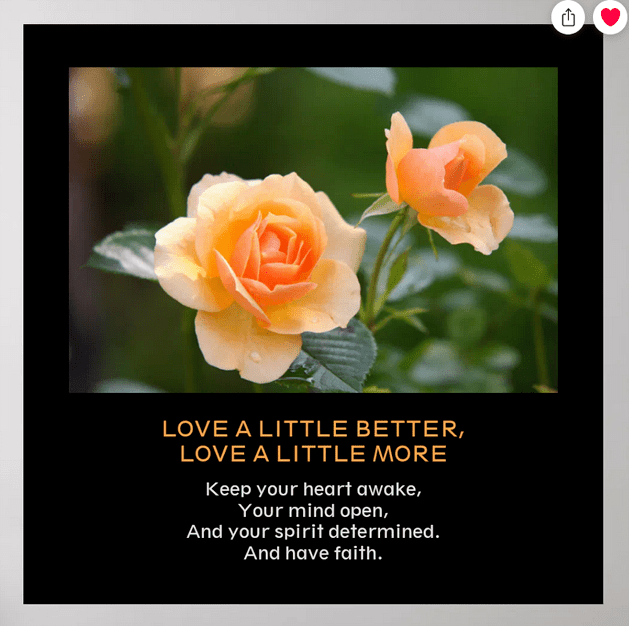
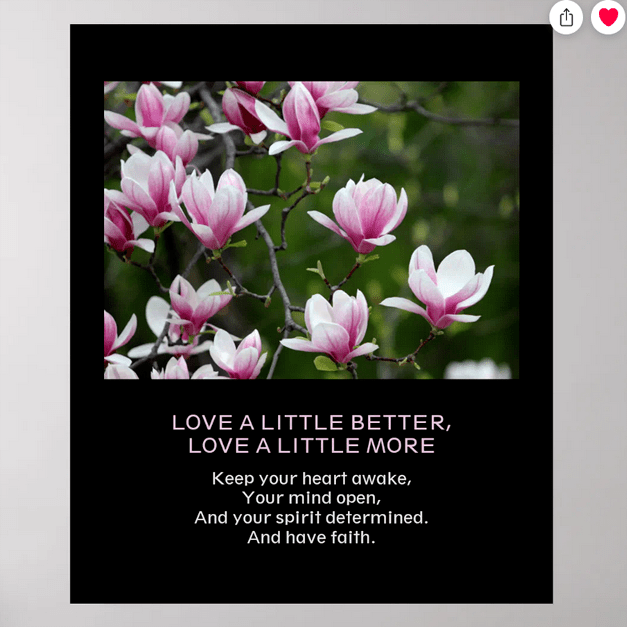
I have also created, alone or with the technical expertise of other artists, some graphic designs for life inspiration. Here are some of them.
Disclosure: This blog post contains some affiliate links. If you click on (any of) them and make a purchase, they generate revenue for this blog (at no extra cost to you!). I am a Zazzle Associate and designer, and I earn commissions when you buy products through my referral links. All affiliate links on this blog are identified as such. Here’s my Full Disclosure.

(affiliate image link)

(affiliate image link)
(affiliate image link)
(affiliate image link)

(affiliate image link)

the words “life hurts,” and a heart
(affiliate image link)


If you’re wondering about the above tree leaves, they are linden, apple, oak, and maple. I meant these leaves to suggest various stages in someone’s life: the heart-shaped linden tree for the big love with which we start in childhood and in youth, the apple leaf for more knowledge along the way, then the oak leaf for sturdiness in middle age, and the maple leaf for the sunset of our life, which can nevertheless be beautiful and full of sap.
I hope you’ve enjoyed this post. As always, pins and shares are much appreciated!
To a happier, healthier life,
Mira


The meaning of life is not searchable. It’s the remembrance of life, your life and all that has existed within it, is the meaning of your life. Like for instance my meaning of life, is not your meaning of life and vise versa.
LikeLiked by 1 person
Yes, but some people go through various experiences and the meaning or meaningful things in their life may not become apparent to them. There are many people wondering about their choice of career or romantic partner, or struggling with various issues, and they may feel at a loss, in many ways.
LikeLike