


Foods my mother eats and which I, too, have adopted (Photo by the author)
I like to experiment in the kitchen and use modern superfoods, but my mother likes to eat traditional foods. Here are a number of them with some of their health benefits.
Article originally published on April 28, 2023 in The Road to Wellness on Medium
Last year my mother and I did a set of 30 tests as part of our comprehensive blood work. My mother, at 74, scored well on ALL of them. True, she does take some pills, including half a pill for cholesterol and an omega-3 supplement, but her blood work is stellar mostly because of her diet.
I, on the other hand, am struggling with high cholesterol and triglycerides. I also have a herniated back and less-than-perfect knees, unlike my mother, who despite not working out in conventional ways, is in quite good shape. So while I’ve been researching ways to deal with these numbers and also seen an MD for a detox, I’ve also started to pay more attention to what this woman, amazing in many ways, eats.
Of course, her genes play an important part as well, but so does the fact that she cooks with olive oil instead of sunflower oil, consumes saturated fats in moderation, doesn’t drink much alcohol, doesn’t smoke, and eats lots and lots of veggies, along with some important fruit.
Here are some of my mother’s staple foods. They are all very popular in Romania among older folks, but, again, not everybody cooks them the same way.
Disclaimer: I am not a medical or health practitioner, and no part of This Blog, or the articles, websites, and products I mention and link to on This Blog, is intended as professional medical or health advice, and should not be considered as such. Consult with your doctor(s) about starting any course of treatment, taking any supplements, or changing any (dietary, exercise, etc.) routines. Note that natural supplements and even some foods may interfere with certain medications. Also ask your doctor(s) about potential allergies you may have, including cross-reactive allergies. Some allergens can cause anaphylaxis. Here are my Full Terms and Conditions.
Disclosure: This blog post contains some affiliate links. If you click on (any of) them and make a purchase, they generate revenue for this blog (at no extra cost to you!). I am a Zazzle Associate and designer, and I earn commissions when you buy products through my referral links. All affiliate links on this blog are identified as such. Here’s my Full Disclosure.
Green onions, Tomatoes, Radishes, and Cabbage
Every spring, my mother does forty days or so of fasting for the Christian Orthodox Easter. During her fast, she abstains from meat, fish, eggs, and dairy, with some exceptions for fish on certain days.
Many people eat lots of pastries with margarine during this time, but Mom focuses on various veggie stews and baked veggies. I love her sweet peas stew with onion, garlic, carrots, tomato sauce, and dill. She also bakes a pan of onion, carrots, zucchini, and beets — with a bit of garlic as well.
I have to say I “invented” — to use one of Mom’s often derogatory terms for my cooking (she doesn’t like to invent recipes from scratch) — the second recipe based on advice shared by Jamie Oliver when he presented three dishes of his own. While Mom doesn’t always go for my kind of cooking, in this case, she appreciated my recipe.
But aside from all these cooked veggie mixes, my mother loves eating raw food in spring, namely green onions or green garlic with tomatoes and radishes, which she often pairs with bread drizzled with olive oil.
In fact, she never goes without green onions in the spring, and she also has veggies for salads chopped up in the fridge. The salads include these green onions, radishes, tomatoes, and lettuce (sometimes cucumbers as well). When she makes them, she adds salt, olive oil, and balsamic vinegar.
Tomatoes and olive oil are a match made in heaven. I prefer cooked tomatoes with olive oil myself, which makes their lycopene more readily accessible, but I guess these raw salads don’t hurt either, and they do make for more occasions to eat tomatoes, which are truly a superfood.
Tomatoes contain folate, potassium, and fiber, among other nutrients, and lots and lots of antioxidants, among them vitamin C, beta-carotene (which turns to vitamin A in the body), lycopene, chlorogenic acid, and naringenin.
Among its health benefits, lycopene helps with cholesterol — it reduces LDL (“bad”) cholesterol while raising HDL (“good”) cholesterol — while also doing wonders for collagen.
In fact, I watched a documentary last night on how to keep our skin young, and they specifically mentioned lycopene.
Radishes are lesser-known cruciferous vegetables related to broccoli, cauliflower, cabbage, and turnips. Their micronutrient content is not impressive — although according to a general table provided by the USDA, 100 grams of radishes do provide 24% DV vitamin C and 6% fiber — but they have a good number of powerful phytonutrients, from beta-carotene and ferulic acid to glucoraphanin and sulforaphane.
Sulforaphane, a compound in cruciferous vegetables, also helps with arthritis. My mother may not eat broccoli, but she’s always eaten a lot of cabbage — and, in springtime, lots and lots of radishes. My mother has no problems with her joints, which is pretty amazing at 74.
As for the green onions, they are rich in quercetin and other flavonoids. Among other health benefits, these compounds reduce inflammation, protect against cancer, and, hear this, lower LDL (“bad”) cholesterol while raising HDL (“good”) cholesterol.
Green onions also contain vitamin C, magnesium, potassium, and iron, all of them very welcome nutrients. Between the quercetin and these other nutrients, green onions are very good for the heart as well. They also help support one’s immune system.
Continued in Part 2, Part 3, and Part 4
And now here are some of my products with 35 foods that help lower cholesterol. Again, talk to your doctor first. This list, originally inspired by Chef Braux’s How to Lower Your Cholesterol with French Gourmet Food (affiliate link) and extended with more recent research of my own, is meant for information purposes only. Remember that some people have a hard time lowering their cholesterol with food and walking along with one dance class a week, as he did, or even with food and regular exercise, and they may need an allopathic treatment. Personally, however, I managed to improve my cholesterol and triglyceride levels about a year ago after a detox diet and then by including more cholesterol-reducing foods in my daily meals, and I managed that at the time with minimal exercise—well, I did go often for acupuncture and chiropractic treatments, so that counted too as exercise, I guess.
Here’s my list of 35 foods that help reduce cholesterol naturally. They include almonds, apples, avocado, garlic, lentils, onion, olive oil, lentils, persimmons (kakis), pistachios, prunes, salmon, walnuts, and many others. Enjoy!
Please note that the writing is much crisper on the actual products. Just click on the images to see them on Zazzle.


Mug for Righties (affiliate image link)

and smoke and drink less. Mug for lefties (affiliate image link)

Hard plastic beverage coaster with a cork back (affiliate image link)
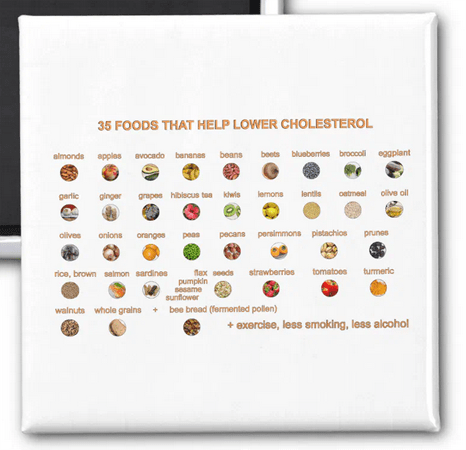
less smoking, and less alcohol. Magnet (affiliate image link)

along with exercise, less smoking, and less alcohol. Natural ways to reduce cholesterol
(affiliate image link)
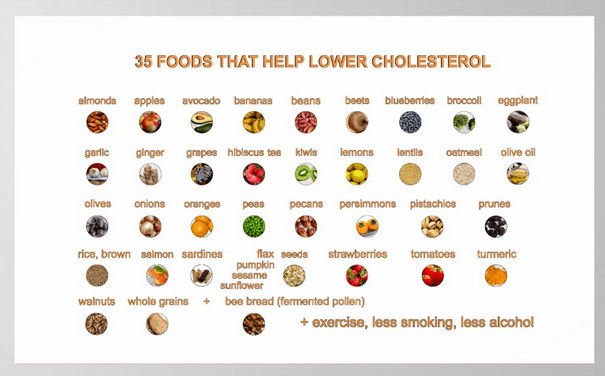
along with exercise, less smoking, and less alcohol. Poster (affiliate image link)
Thank you for reading! I hope you’ve enjoyed this article. As always, pins and shares are much appreciated!
To a happier, healthier life,
Mira
 HappierHealthier.Blog
4 Comments