

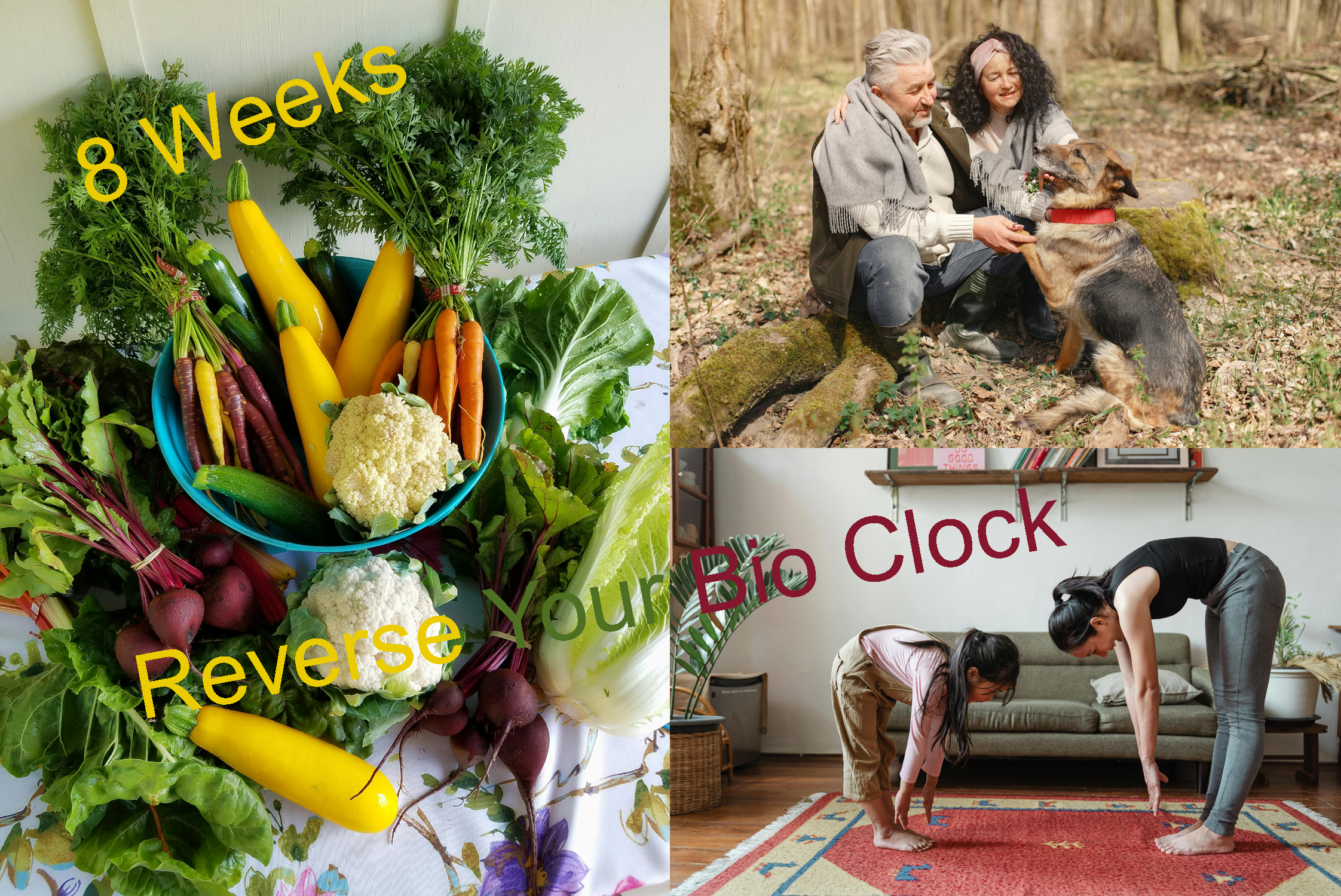

Dr. Kara Fitzgerald’s research on DNA methylation (lowering your bio age via nutrition and lifestyle) suggests we can, actually, get younger.
Originally published in Middle-Pause on Medium on January 3, 2026
I’ve written elsewhere a long review of Dr. Kara Fitzgerald’s book Younger You: Reduce Your Bio Age and Live Longer, Better (Hachette Go, 2022), but I feel that review has not found enough readers, and so I’d like to reiterate some of its points here.
This book is well-suited for those in middle age, as it may take some time for us to find our nutritional footing in today’s informational space. Not only that, but women’s metabolism and appetite change during menopause, making it harder for us to stay healthy. So when I found Dr. Fitzgerald’s book on orthomolecular nutrition and how to reverse our biological clock by years in just 8 weeks, I was thrilled.
Disclaimer: I am not a medical or health practitioner, and no part of This Blog, or the articles, websites, and products I mention and link to on This Blog, is intended as professional medical or health advice, and should not be considered as such. Consult with your doctor(s) about starting any course of treatment, taking any supplements, or changing any (dietary, exercise, etc.) routines. Note that natural supplements and even some foods may interfere with certain medications. Also ask your doctor(s) about potential allergies you may have, including cross-reactive allergies. Some allergens can cause potentially fatal anaphylaxis. Here are my Full Terms and Conditions.
It can be overwhelming to decide on a healthy food and lifestyle regimen, which is why many younger people fall prey to diets touted by celebrities. I shake my head when reading those recommendations. They tend to be way off the health-compass needle, or far from my own preferences.
For instance, I don’t want to eat too much protein, preferring instead to load on vegetables and fruits, as Dr. Fitzgerald recommends in both her Intensive and Everyday plans. The question then becomes which vegetables and fruits would be most helpful, and how to include them in appetizing dishes. Fortunately, in her 684-page book, Dr. Fitzgerald includes many scrumptious recipes.
While I don’t fully follow the author’s Younger You Intensive and Everyday plans, her food and lifestyle recommendations helped me fine-tune my own.
I now walk more and give more hugs (yes, cuddling is important). Plus, I move my body with slow and fast dance moves, in addition to calisthenics and a bit of yoga.
In terms of food, I add more onion to my avocado salads, include more broccoli and spinach in my meals, and eat blueberries several times a week, among other things. I also make more smoothies with strawberries and other berries and soy milk. I have salmon, smoked or baked, up to three times a week. I add lots of lemon juice to my baked salmon and to salads. The list can continue.
And, despite the oxalates, I eat beetroot regularly too, though much less than Dr. Fitzgerald recommends for her Younger You Intensive and Everyday plans.
Younger You: Reduce Your Bio Age and Live Longer, Better is about epigenetics — more specifically, about DNA methylation, the kind that helped participants in a small pilot study led by Dr. Fitzgerald shave an average of 3.23 years off their biological age in 8 weeks with the help of her Intensive program.
DNA methylation is a mechanism that adds a methyl group to DNA without changing the DNA sequence. It only controls gene expression by turning genes off (silencing them or turning down their expression) or on (activating them or turning up their volume). A third component of DNA methylation is demethylation, passive in cell division, when the new DNA strand loses certain DNA methylation marks, and active when enzymes help remove a methyl group from the DNA.
These epigenetic processes help rebalance the body. In doing so, they may even help it heal itself, bringing relief from conditions such as autoimmune diseases and allergies, since using epigenetics to our advantage can reverse the biological age. Age is, of course, the most important risk factor of disease.
According to data shared by the author, people in the US live an average of 79.3 years, but they can develop serious illnesses before that, at 63.1 years old, on average. So yes, age does matter, as many chronic conditions develop as we get older. The good DNA methylation can either postpone — or even prevent — the onset of these conditions or alleviate their symptoms.
Dr. Fitzgerald’s clinical study was small, which presents problems statistically, but the results are no less important because of that. There is some value even in small samples. After all, studies for rare diseases that make it to a phase III clinical trial are also small.
Dr. Fitzgerald conducted her study on 38 healthy male participants aged 50 to 72 years. Eighteen of these comprised the intervention group, who followed the Younger You Intensive program for 8 weeks. Across the board, these participants managed to take, on average, 3.23 years off their bio age.
That was for healthy participants. As the author remarks, if she had chosen volunteers with health problems, their bio age reversal is likely to have been even bigger. On the other hand, as the author explains, such volunteers would have needed more time on the Younger You Intensive program for their bodies to fight the inertia of chronic illnesses.
Dr. Fitzgerald didn’t want to introduce extra variables in this first study, but then she did follow up with a study of middle-aged women — between 46 and 65 — as well, albeit with only six women.
They decreased their bio age by 4.6 years on average, with one 62-year-old woman showing a spectacular result: 11.01 years off her bio age! True, another 62-year-old woman showed zero change, so we’re dealing again with the scientific limitations of small samples.
That said, the science is there when it comes to the DNA methylation effects of some important micronutrients (vitamins and minerals), as well as phytonutrients. As regards the latter, the ones studied from an epigenetic perspective include:
anthocyanins, present in red, purple, and blue fruits and vegetables;
catechins, present in green and black tea, dark chocolate, berries, red wine, etc.;
curcumin, in turmeric;
diindolylmethane (DIM), which is a metabolite of a compound found in broccoli, kale, cabbage, and other cruciferous vegetables;
ellagic acid, found in raspberries, strawberries, cranberries, and other fruits, as well as in walnuts, pecans, and almonds;
equol, a metabolite of daidzein, a phytoestrogen in soy foods;
fisetin, with the highest concentrations in strawberries and then apples;
genistein, present in soy products, mostly;
hesperidin, present in citrus fruits, mostly;
lycopene, famously present in tomatoes, and then in carrots, watermelon, and rose hips;
quercetin, a common flavonoid present in red onions and red fruits, such as apples, berries, and grapes, along with citrus fruits, kale and broccoli, black and green tea, and red wine;
resveratrol, famously found in red grapes and red wine as well as in blueberries, cranberries, and dates;
rosmarinic acid, abundant in rosemary and other plants of the mint family, such as certain spearmint varieties, sage, oregano, basil, and thyme;
silibinin, mostly found in milk thistle and then in artichokes;
sulforaphane, famously found in broccoli and other cruciferous vegetables;
and others.
There are many other important nutrients in plants, out of a total of 10K+ identified and 150 studied in more depth, but Dr. Fitzgerald focused on only 22 phytonutrients and 2 metabolites in this book.
As a practitioner of orthomolecular nutrition, Dr. Fitzgerald works with whole foods only. Her approach is thus different from many others in the field of orthomolecular medicine. In the past, famous practitioners of functional medicine usually tried to redress biochemical imbalances in the body by amping up the ingestion of certain micronutrients (vitamins and minerals, often a single vitamin or mineral) or phytonutrients with potent supplements.
Instead, Dr. Fitzgerald relies on DNA methylation to do the trick of restoring the body to balance, with the help of three core helpers: methyl donors, methylation adaptogens, and lifestyle factors. Methyl donors contribute to DNA methylation. Methylation adaptogens help regulate DNA methylation, so it happens in an appropriate way at the right spots. Lifestyle factors are healthy habits that lead to balanced DNA methylation.
The most important methyl donors are folate (vitamin B9) and vitamin B12, along with betaine and choline, and then a few minerals (zinc, magnesium, potassium, and sulfur), some other B vitamins, some amino acids, and omega-3 fatty acids.
DNA methylation adaptogens include flavonoids like curcumin, EGCG, quercetin, and lycopene, among the better-known ones, along with vitamins A, C, and D3.
Lifestyle factors, or levers, as she calls them, start with appropriate foods, and go on to include moderate exercise, a healthy gut microbiome, sufficient restful sleep, meditation and other relaxation, and, yes, cuddling. The negative levers are toxins, too little or too much exercise, a bad gut microbiome, excessive stress, certain medications, and high blood sugar.
And now we come to the specifics of her two Younger You plans, the Intensive program and the Everyday one.
The diet in the Younger You Intensive plan is a lower-carb, low-glycemic, and high-fiber food regimen, relying mostly on vegetables — 7 cups a day — with the addition of healthy fats and moderate protein. It includes animal protein, preferably organic. There is some fruit — 2 half cups a day — but unless you’re vegetarian or vegan, no legumes.
The plan includes no grains, no dairy, and no gluten, and it does include teaspoons of herbs, nuts (except peanuts), seeds or seed butter, tea, coffee, and cocoa powder. You get 3 meals and 2 snacks a day, in amounts that won’t make you hungry, and you keep a 12-hour fasting window between evening and morning. She prescribes various foods in what she considers to be the right amounts.
The author repeatedly warns about supplements as unbalancing the body rather than helping it, but then she does take a chapter to discuss supplements that may be beneficial. She also seems to think that there cannot be too much of a healthy food. However, I find some of her recommendations, such as one to two medium beets per day on the Intensive plan or her amounts of liver, excessive.
From what I’ve read, liver should be limited to one portion a week, or else you risk vitamin A toxicity, and beets are high in oxalates, which can cause kidney stones, along with digestive issues, joint pain, fatigue, and other health problems. Other foods, such as maple syrup and yerba maté, can also be detrimental to health in excessive amounts.
Broadly speaking, though, I like her choice of foods. She recommends twelve superfoods in specific amounts. These foods — the Dynamic Dozen, she calls them — include green tea, turmeric, blueberries, rosemary, cruciferous vegetables, beets, eggs, organic liver, seeds, salmon, shiitake mushrooms, and spinach. Aside from these foods, there are many others to choose from.
The author notes that adopting the Intensive plan for 8 weeks can cause fatigue and digestive problems, among other things, as the body adjusts to the dietary changes.
The lifestyle changes Dr. Fitzgerald recommends are easy to implement: for the Younger You Intensive plan, a minimum of five weekly sessions of thirty to sixty minutes of exercise without working up too much of a sweat (walking briskly and working in your garden will do), enough restful sleep, meditation (ten to twenty minutes twice a day), along with cuddling and other ways to boost oxytocin.
According to Dr. Fitzgerald, the Younger You Intensive plan is best kept once or twice a year.
For the remaining time, she recommends the Younger You Everyday plan, a more relaxed diet which, she cautions, may not reverse aging but only slow it down.
The Everyday plan includes legumes, whole grains (preferably gluten-free and not fortified with folic acid), and organic dairy. You can also eat certain sweet foods like dates and maple syrup, and drink small amounts of alcohol.
In contrast to the Intensive diet, the Everyday diet includes only 4–5 cups of vegetables a day. It also allows for 1 to 2 half cups of legumes — best soaked or sprouted. As for healthy fats, there are only 3 tablespoons of them on this plan compared to more than 5 of them on the Intensive plan. Then there’s one daily cup of grains and up to 2 daily servings of dairy. And then there are those beets again, this time 3 per week.
There’s more health info in the book, including the author’s recommendations for women pre-conception and during pregnancy. And there is the fabulous recipe section already mentioned.
I hope this article has been informative. For more ideas on how you may be able to change your life for the better, I recommend you read Dr. Kara Fitzgerald’s book. But if you don’t have the time right now, here’s my lengthier introduction to Younger You: Reduce Your Bio Age and Live Longer, Better.
To a happier, healthier life,
Mira
 HappierHealthier.Blog