


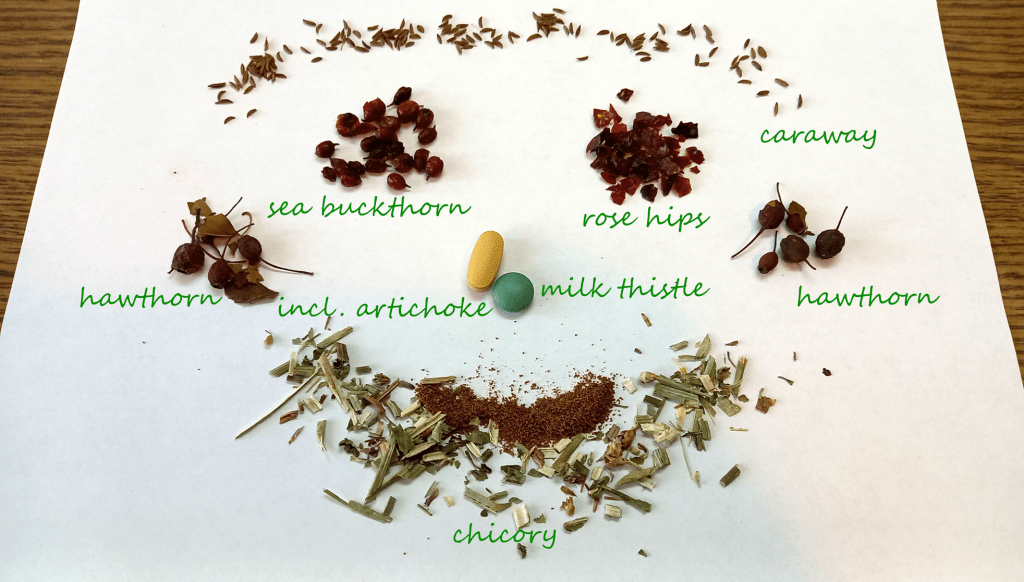
A review of a Reader’s Digest book, Nature’s Medicines: A Guide to Herbal Medicines and What They Can Do for You, supported by further scientific findings
Originally posted in The Road to Wellness on Medium on August 16, 2024
Part 2/3
(Here’s Part 1/3)
Sea Buckthorn (Hippophae rhamnoides), Family Elaeagnaceae
Sea buckthorn is a popular remedy here in Romania, mostly in the form of cold-pressed fruit mixed with honey, syrup with cold-pressed juice, and tea.
Of its complex and powerful antioxidant content, the book focuses mostly on vitamin C content, which, they say, is 10 times higher than that of lemons. With 400 mg per 100 g of fruit for sea buckthorn and 53 mg per 1 lemon (of 100 grams), it comes to 7,54 times more rather than 10 times more, but even so, it is impressive.
Disclaimer: I am not a medical or health practitioner, and no part of This Blog, or the articles, websites, and products I mention and link to on This Blog, is intended as professional medical or health advice, and should not be considered as such. Consult with your doctor(s) about starting any course of treatment, taking any supplements, or changing any (dietary, exercise, etc.) routines. Note that natural supplements and even some foods may interfere with certain medications. Also ask your doctor(s) about potential allergies you may have, including cross-reactive allergies. Some allergens can cause potentially fatal anaphylaxis. Here are my Full Terms and Conditions.
The editors also mention that sea buckthorn has vitamin E, beta-carotene, and flavonoids, all of which make this fruit, they note, a great stimulant of the immune system, one that helps fight the colds of the fall and winter seasons and is also a good remedy against fatigue and while recovering from an illness.
The editors include a note on a 2002 study on rats, where sea buckthorn fruit and seeds were shown to prevent and help treat gastric ulcers.
But sea buckthorn contains other antioxidants as well, including other carotenoids — such as lycopene, lutein, and zeaxanthin —, zinc, and various polyphenolic compounds other than flavonoids, which do a world of good on the body.
Lycopene is a star among phytonutrients, helping with everything from cholesterol to the prevention of bone loss and lower risk of dementia. It also helps against cataracts and age-related macular degeneration, which is probably why my tomato- and watermelon-loving mother has no incipient cataracts at 75+ years of age. And did I mention lycopene also reduces the risk of cancer and could even help reduce the spread of malignant tumors?
Lutein and zeaxanthin, two other important carotenoids, are mostly known for their many roles in promoting eye health, but they also help with some of the above conditions, including hyperlipidemia, bone loss, and lower risk of dementia.
Sea buckthorn also contains B-complex vitamins — including, surprisingly, vitamin B12 (more than 98% bioactive), as it lives in symbiosis with Frankia alni bacteria, as evinced by a 2015 study.
It also contains palmitoleic acid, an omega-7 monounsaturated fatty acid that’s rarely found in plant foods, and then it’s also rich in omega-3, omega-6, and omega-9 polyunsaturated fatty acids. Palmitoleic acid helps improve the metabolism of cholesterol and has also been shown to fight hepatosteatosis (fatty liver disease) in mice. It also benefits insulin sensitivity, among other things.
A 2017 metastudy shows that sea buckthorn also helps improve cholesterol and triglyceride levels and NAFLD in subjects with hyperlipidemia while not impacting the lipid profiles of healthy subjects. The researchers named flavonoids and beta-sitosterol for these health benefits, but palmitoleic acid most likely played a role in them, too.
As per Precautions, the editors advise against sea buckthorn juice or syrup at the end of the day because of its vitamin C content, but sea buckthorn also contains vitamin E, and as such, can interact with blood-thinning medications, augmenting their effects dangerously. It’s also recommended elsewhere not to use sea buckthorn for at least 2 weeks before surgery for this reason.
WebMD adds Precautions with sea buckthorn fruit that one should use only food amounts and not use it when pregnant or breastfeeding.
Caraway (Carum carvi), Family Apiaceae
Caraway is prized for the volatile oils, mostly carvone and limonene, in its dry one-seeded fruits (achenes) and has been traditionally used as a digestive aid, especially against cramps and flatulence, as this book also acknowledges.
My maternal grandfather’s mother used to make caraway soup as a first course before they ate beans as a second course. Quite a suitable choice, I’d say. Growing up, I ate this caraway soup too, made by my grandfather. It had little more than caraway seeds in it, but they are so flavorful that the soup is actually palatable.
As an aside, here’s my grandparents’ traditional recipe for caraway soup for a 3-liter pot. Make a roux with 1 tbsp of flour and 50 ml of oil. Add 2 liters of hot water and one 1 tsp of caraway. Boil this thing for 5 minutes with one whole (peeled) onion. Finally, run the soup through a sieve. That’s it!
Back to Nature’s Medicines, the editors also note that carvone and limonene are also antibacterial, and as such, they can help with intestinal infections, among other things.
Caraway is more than a digestive aid, however. Among other health benefits, carvone and limonene also have beneficial effects on liver health and antioxidant and anti-inflammatory properties. As such, caraway seeds can help with inflammatory conditions of the stomach and intestines, as well as with arthritis and other chronic inflammation.
Caraway seeds are also rich in fiber, which helps with blood sugar spikes as well as cholesterol — the latter also on account of its lignans content.
These seeds are then an important source of potassium. Within safe limits, this mineral helps lower blood pressure and benefits the heart.
Besides a great deal of potassium, caraway seeds also contain calcium, phosphorus, magnesium, and zinc, all of which are important for bone health, among other things.
Last but not least, caraway is rich in the carotenoids lutein and zeaxanthin, the antioxidant and anti-inflammatory phytonutrients that support eye health in many important ways and reduce the risk of cataracts, age-related macular degeneration, and other eye diseases.
I grind them and use them in super-healthy gluten-free doughs, where they impart great flavor. I also use ginger and turmeric in these doughs. It’s easy to do that. You just make your regular dough with regular flour or gluten-free, and then add a flat teaspoon of ground caraway along with one flat teaspoon of ginger powder and half a flat teaspoon of turmeric. It’s best to use organic turmeric to make sure its yellow color is natural — from curcumin — and not heightened with lead chromate or other deleterious chemical. And, also, make sure you can, in fact, consume these spices (see Precautions and talk to your doctors).
Caraway is also great in pastries with cheese. My grandmother used to make one such recipe with little more than eggs and cheese in the dough and with whole caraway seeds sprinkled on top after brushing the croissant shapes with egg wash.
Precautions listed. Use the essential oil according to a medical professional’s prescription. Caraway can cause allergic reactions.
WebMD adds more Precautions, including the fact that caraway may increase iron absorption in the body, which can become a problem, especially when taken with iron supplements or in people with high levels of iron.
Another important note is that caraway helps lower your blood sugar — especially when using the oil or an extract — which may interfere with some of your medications. It’s also not recommended during pregnancy and when breastfeeding, as caraway oil may cause a miscarriage. Also, stop using it at least 2 weeks prior to surgery.
Note that caraway may also lower your blood pressure, which may be a problem if you take anti-hypertensive drugs or other medications.
Caraway seeds also contain high levels of salicylates (natural aspirin), which are a blood thinner and may dangerously compound the effects of anticoagulants and other drugs.
These salicylates can also make asthma worse and cause allergic reactions, as the editors note.
And then, unfortunately, caraway is also linked to pollen food allergy syndrome and to allergies to profilin proteins, among other things.
To Be Continued . . .
Here’s Part 1 if you missed it.
To a happier, healthier life,
Mira
 HappierHealthier.Blog
2 Comments