

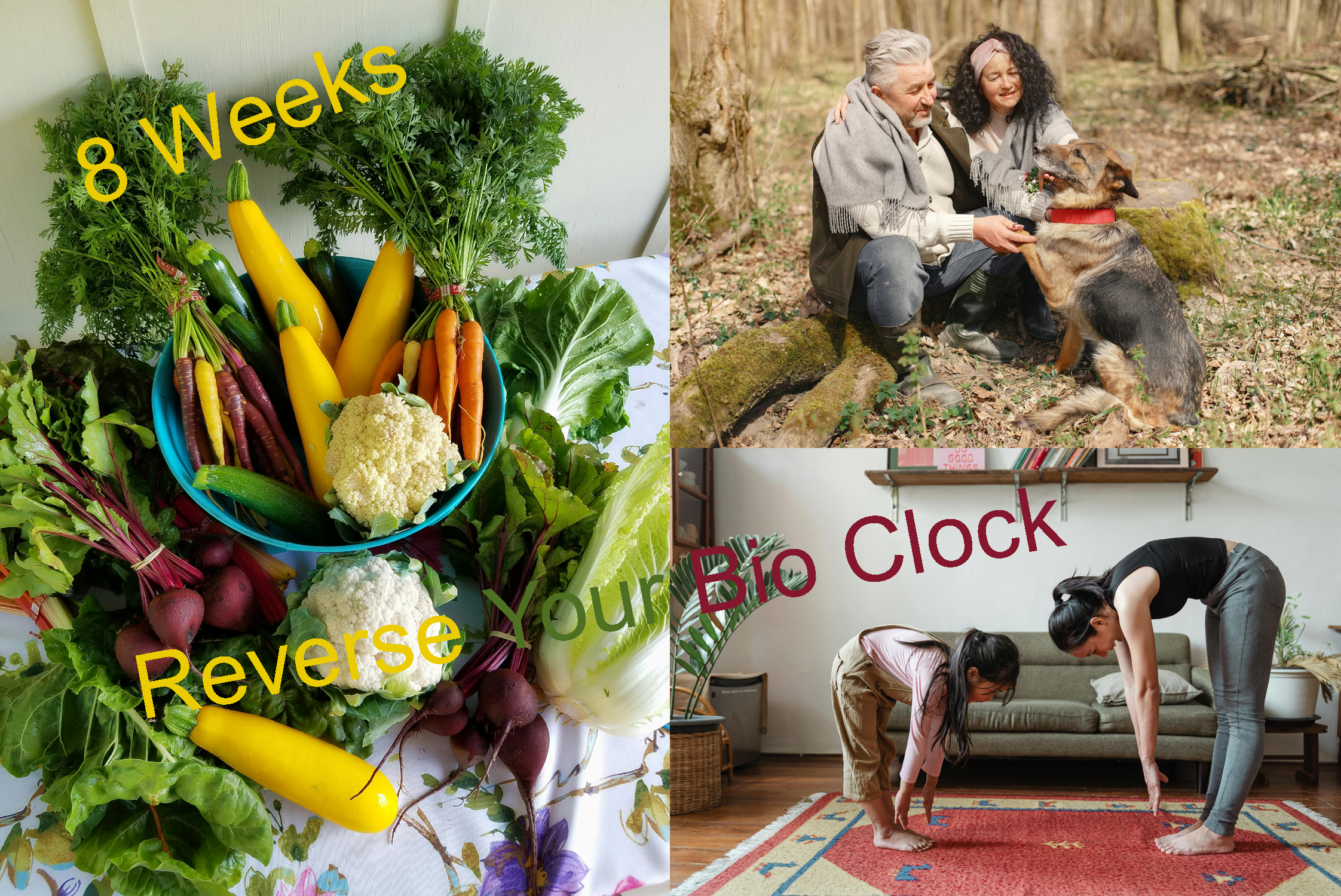

The basics of DNA methylation, the foods that promote it, and how you can get younger and healthier with the Younger You Intensive and Everyday diet and lifestyle plans.
Part 2/3
Originally published in The Road to Wellness on Medium on March 21, 2024
Based on scientific findings and one very successful clinical trial, along with Dr. Kara Fitzgerald’s work at a clinic, Younger You: Reduce Your Bio Age and Live Longer, Better (Hachette Go, 2022) offers the reader not only some preformed diet and lifestyle solutions to reverse bio age and enjoy health for longer but also some great ideas.
You’ll find many ideas in the book that you may apply regardless of following one diet and lifestyle plan or another — ideas that, furthermore, you may integrate into various other diet plans, as I’ve mentioned before.
One such idea — perhaps not all that surprising — is that cuddling, too, affects our bio age. I know there are people who don’t like to hug family and friends, and I feel it’s such a shame. I confess I, too, have become more of a hugger after reading this book, much as I’ve been one before. Among other things, I’ve learned that infants who grow in group homes without much love, physical or otherwise, suffer intractable developmental challenges partly because their epigenetic activity suffers from a lack of embraces and other physical expressions of love.
Another idea that struck a chord is that high-sugar meals impact the body for much longer than I thought, longer than six days in the case of mice. Mice and humans are not all that similar, after all, but in terms of lifespan, one mouse day equals about forty human days, so six mouse days is quite a lot.
Disclaimer: I am not a medical or health practitioner, and no part of This Blog, or the articles, websites, and products I mention and link to on This Blog, is intended as professional medical or health advice, and should not be considered as such. Consult with your doctor(s) about starting any course of treatment, taking any supplements, or changing any (dietary, exercise, etc.) routines. Note that natural supplements and even some foods may interfere with certain medications. Also ask your doctor(s) about potential allergies you may have, including cross-reactive allergies. Some allergens can cause potentially fatal anaphylaxis. Here are my Full Terms and Conditions.
Dr. Fitzgerald goes on to describe four small recent studies where the volunteers showed a reversal of their bio age — whether the studies set out to do that or not — after being given various medications and supplements. One targeted regeneration of the thymus gland and involved nine healthy young men taking the growth hormone and metformin, a diabetes medication, among others, for a year. The second study involved 120 people who ate a Mediterranean diet and took 400 IU of vitamin D3 for a year. The third study involved African American volunteers who were overweight or obese; they took vitamin D3 supplementation in various doses. The fourth study is the one devised by Dr. Fitzgerald as a principal author. It was published in the peer-reviewed research journal Aging in 2021.
I’ll leave you to read the details of these studies in the book, but the main point is that they all had some success with regard to reversing bio age, but, in the case of the first one, it must have come at a high cost, with difficult side effects and possible negative influence in the long run, and in the case of the third one, the author argues that vitamin D3 supplementation may not make much difference if one has enough of it in one’s body.
Dr. Fitzgerald’s study involved thirty-eight healthy male participants, fifty to seventy-two, eighteen of whom comprised the intervention group who stuck with the Younger You Intensive program for eight weeks. The study didn’t include women because she didn’t want to compound the variables of the study with the effects of women’s sex hormones at this age, but she has, in the meantime — 2023 — published the results of a study on middle-aged women as well.
Even though they were healthy, with good diet habits and a regular exercise regimen, the study participants showed a decrease of 3.23 years of their bio age after only eight weeks! And, as Dr. Fitzgerald points out, this figure would have probably been even bigger with less-than-healthy participants. On the other hand, Dr. Lucia Aronica, Ph.D., an epigeneticist whom Dr. Fitzgerald cites in her book, believes that people with chronic illnesses may have a tougher time reversing their biological age, so they would need more time on a program such as Younger You Intensive.
Before getting to the tenets of the Younger You programs, the author spends some time explaining that genes do not make or break us, much as this was part of the expectations when the results of the Human Genome Project were published in 2003: to know where to intervene to fix disease. As Dr. Fitzgerald says, with a poignant analogy, to expect so much power from one’s genes is similar to looking at an old newspaper, one from the day of your conception, and assuming it describes today’s events. Much water has gone under the bridge since then, and we have epigenetics to thank or blame for most of that. The information in one’s DNA is still, of course, relevant when mapping a course toward better health — even though, as the author says, it’s often confusing as well — but according to Dr. Fitzgerald, your diet, lifestyle, and various other environmental factors have more impact on your health than your genes, so nurture wins over nature.
She goes on to discuss various studies that show the long-lasting effects of diet — often ranging over generations — on agouti mice and humans, including a passage about the Dutch Hunger Winter of 1944–45, when those who were in the womb at the time were impacted negatively by their experience in utero, developing health conditions, including obesity and diabetes, that were later read into their epigenome in 2018 when scientists looked at 350,000 methylation places on their DNA. Another important study showed that the amount of food preadolescent boys ate impacted not only their epigenome but that of three subsequent generations! But, as the author says, all is not lost, as diet and lifestyle interventions can change even deep-seated epigenetic changes.
Dr. Fitzgerald argues that in terms of food quantity, moderation is golden, but I’d say that, while broadly correct, this is a simplistic view since hermit monks who don’t exercise a lot may live healthy into old age on very little food if the food is healthy and they are exposed to very few toxins, while a high-performing athlete may not only need more calories but also a diet regimen that takes into account periods of great exertions, periods of detoxification, vacation time, and so on.
The author discusses how modulating the epigenome with the Younger You programs fights various conditions and illnesses: obesity, Alzheimer’s, cardiovascular conditions, type 2 diabetes, depression, autoimmune diseases and allergies, and cancer.
Continued in Part 3
And here’s Part 1 if you missed it.
To a happier, healthier life,
Mira
 HappierHealthier.Blog
2 Comments