

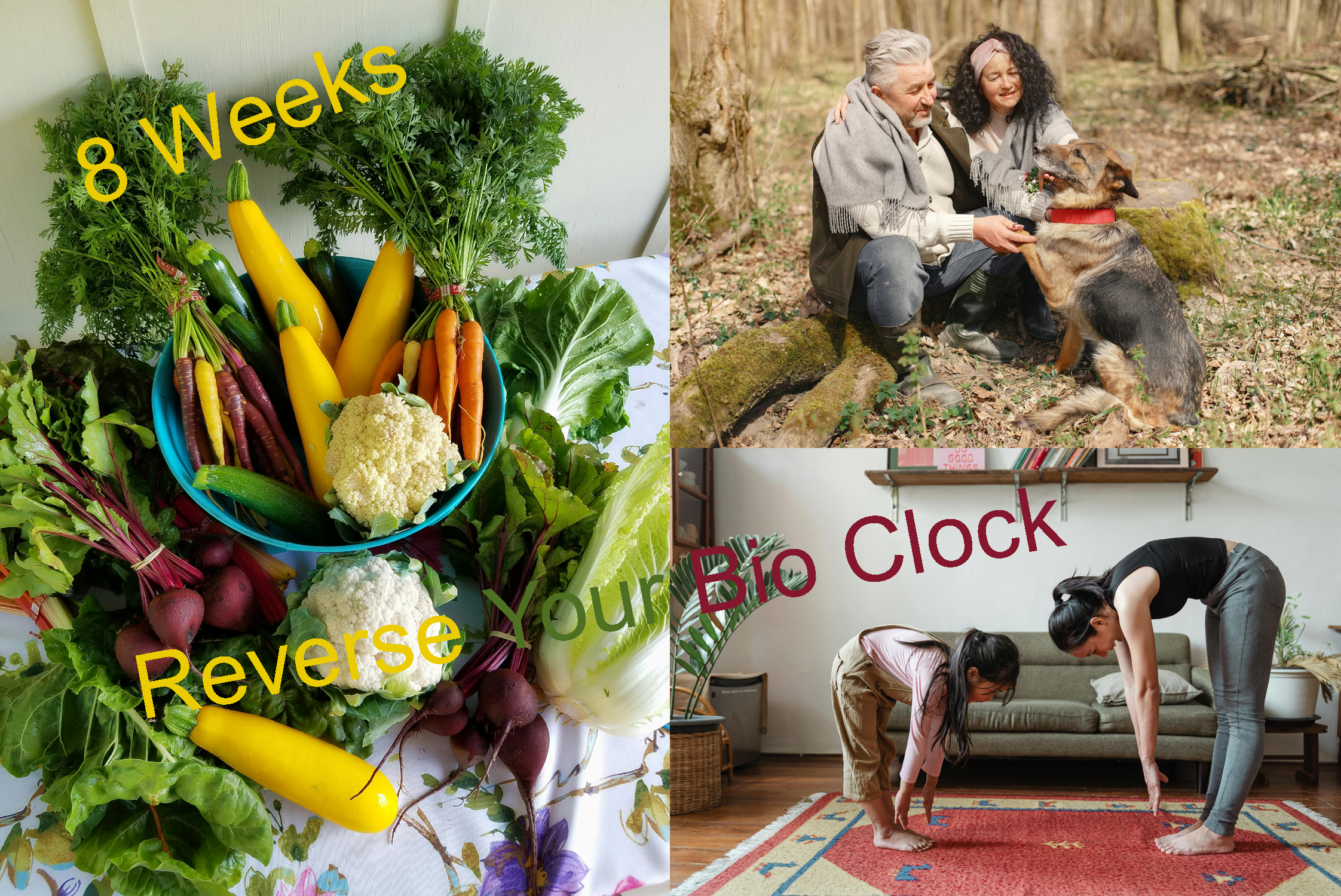

The basics of DNA methylation, the foods that promote it, and how you can get younger and healthier with the Younger You Intensive and Everyday diet and lifestyle plans.
Part 1/3
Originally published in The Road to Wellness on Medium on March 21, 2024
Based on scientific findings and one very successful clinical trial, along with Dr. Kara Fitzgerald’s work at a clinic, Younger You: Reduce Your Bio Age and Live Longer, Better (Hachette Go, 2022) offers the reader not only some preformed diet and lifestyle solutions to reverse bio age and enjoy health for longer but also some great ideas.
The book is packed with so many amazing comments on epigenetics and helpful nutritional information that I’m sure I can’t do it justice in this review. But I’ll try. The book has 684 pages and I’ve been reading these past few days the delightful recipes she offers in the latter part of her book. Younger You is worth reading for these recipes alone! They are tasty gluten-free and dairy-free recipes that you will savor as you also reverse your bio age by a few years.
This book was put together in conjunction with an eight-week pilot study that reversed the biological age of the study-group participants by an average of 3.23 years. I think you agree that it’s pretty spectacular for a two-month intervention to achieve such results. Dr. Fitzgerald, the lead author of this small clinical trial, the first to aim to reverse bio age in healthy individuals through nutrition and lifestyle strategies alone, was just as surprised as the rest of us reading her book.
But then she describes how it all works from the perspective of epigenetics, which dictates how well our bodies can repair themselves, and it all begins to make sense. Epigenetics studies DNA methylation, the action of biological markers that affect gene expression, markers that determine if certain genes are turned on or off. I’ve known of the importance of epigenetics for a while, but this book gave me the impetus to put a lot of what I know about health and nutrition to better use and change my diet further, try to get more restful sleep, do intermittent fasting and more exercise, and learn more about relaxing breathing (in James Nestor’s book Breath: The New Science of a Lost Art) and meditation (in Daniel Goleman and Richard J. Davidson’s book Altered Traits).
Disclaimer: I am not a medical or health practitioner, and no part of This Blog, or the articles, websites, and products I mention and link to on This Blog, is intended as professional medical or health advice, and should not be considered as such. Consult with your doctor(s) about starting any course of treatment, taking any supplements, or changing any (dietary, exercise, etc.) routines. Note that natural supplements and even some foods may interfere with certain medications. Also ask your doctor(s) about potential allergies you may have, including cross-reactive allergies. Some allergens can cause potentially fatal anaphylaxis. Here are my Full Terms and Conditions.
I personally didn’t do Dr. Fitzgerald’s Younger You Intensive diet and lifestyle plan because I don’t believe in putting my body through abrupt changes, but I did implement small steps, which eventually helped me lose 7 kilograms in less than 2 months and feel so much better in my skin. In the pilot study I mentioned, the participants followed the Intensive program, but Dr. Fitzgerald also details in her book a Younger You Everyday Program. She recommends the latter as a stepping stone to the Intensive program or as a maintenance program after doing the Intensive one. Both plans can be adapted to meet the requirements of various therapeutic diets, be they vegetarianism or veganism, keto and keto-leaning, or Paleo — although she doesn’t recommend a diet like keto for the long term.
Dr. Fitzgerald works at a clinic as a holistic physician, where through her Younger You programs, she has helped patients not only reverse their bio age but also improve or remove symptoms of various conditions such as autoimmune diseases, allergies, and diabetes. She argues that acting on the epigenome through the Younger You program can help rebalance one’s body. It does that because, unlike medicines, her diet and lifestyle plan address the whole body, so instead of dealing with health conditions separately, it helps the body by reversing the single most important risk of disease: age.
Dr. Fitzgerald mentions in her book that she has adopted a baby girl at the age of fifty and that she wants many good years ahead of her to spend with her child. She also brings up various statistics that show that in the US, life expectancy is 79.3, but, on average, at 63.1 years old, people develop a serious health condition, which means that they spend over 16 years with a less-than-fulfilling health-related quality of life. The author embraces the view whereby, instead of constantly declining, quality of life should be about the same throughout one’s life until close to the moment of death. Better yet, besides fighting off or putting off severe chronic illnesses, reversing the biological age may even help extend one’s life.
The author likens epigenetics to the software that works with the hardware of our genes. She then goes on to explain that DNA methylation is the most important part of this software, the operating system. It works by adding a methyl group to DNA, without changing the DNA sequence. This switches genes on or off, or impacts the extent to which they are expressed.
We have many ways to influence DNA methylation and, through them, our biological age and the risks of various diseases, whether that means postponing or preventing their onset or alleviating their symptoms and progression. Fitzgerald lists some of the good factors, and then she goes on to comment more on each of them. The most important good factors — or levers, as she calls them — are just-right foods, moderate exercise, a good gut microbiome, enough restful sleep, meditation and other relaxation, and cuddling. The negative levers are toxins, immoderate exercise (too little or too much of it), a bad gut microbiome, too much stress, certain medications, and high blood sugar.
Methylation impacts every cell in the body continually, and DNA methylation produces and repairs DNA and impacts DNA expression — and these epigenetic marks last through cycles of cell division and further on through generations. Adding methyl groups to a strand of DNA switches the gene off or turns down its expression. This is called hypermethylation. In contrast, hypomethylation, which happens when methyl groups are stripped off a DNA strand, turns that gene on or turns on the volume of its expression.
Hypermethylation refers to a situation where a good gene is turned off. Hypomethylation happens when a bad gene is turned on. It’s a little counterintuitive, but the way DNA methylation works is more commonly thought of as a process that downregulates gene expression. I’ve read elsewhere that positive DNA methylation happens as well, but there’s less research on the latter, and the account in this book is about DNA methylation as suppression of gene expression, and I’m assuming she focuses on too many methyl groups turning off good genes and fewer methyl groups turning on bad genes because, to simplify things, this is what needs to be avoided through a healthy eating regimen and lifestyle. In fact, however, genes are complex enough to be both hypermethylated in some spots and hypomethylated in others.
The third important concept in DNA methylation is demethylation: passive when the DNA replicates without certain DNA methylation marks, and active when enzymes strip off a methyl group from the DNA strand.
The methylation cycle involves a whole range of chemicals — starting with vitamin B12 and folate (vitamin B9), which are supported by choline, vitamins B6, B2, and B3, along with magnesium, potassium, and zinc, themselves supported by other nutrients, including omega-3 fatty acids — that combine to convert methionine into S-adenosylmethionine (SAMe), a compound that has many important functions everywhere in the body and is also a universal methyl donor to various methylation reactions that take place with the help of enzymes. These enzymes, too, interact with nutrients and phytonutrients.
The focus of this book is, in effect, on these latter chemicals, from carbs, proteins, and fats, vitamins and minerals, fiber, and water, to various phytonutrients.
The author lists the phytonutrients of interest to her from an epigenetics perspective. They are anthocyanins; apigenin; catechins, including epicatechin and epigallocatechin gallate (EGCG); chlorogenic acid; curcumin; diindolylmethane (DIM), which is not present in foods, being only a metabolite of a compound found in cruciferous vegetables; ellagic acid; equol, a metabolite of daidzein, a phytoestrogen in soy foods; fisetin; genistein; hesperidin; kaempferol; luteolin; lycopene; myricetin; naringenin; proanthocyanidins, polyphenolic compounds that are also pigments of red, blue, and purple in plants; pterostilbene, a polyphenol present not only in blueberries, cranberries, and several other berries, along with red grapes and almonds, the foods the author lists in her nutrient table, but also in other foods such as peanuts and cocoa, although it’s true that only in lesser amounts; quercetin; resveratrol; rosmarinic acid; silibinin; sulforaphane; and ursolic acid.
The above list is extensive but not comprehensive enough, given all the important phytonutrients identified so far. But this is the extent of research directly focused on DNA methylation. There’s much more to discover in terms of healthy eating, however, and I would point here specifically to the 2020 PREDIMED-Plus randomized trial from Spain, which involved 6633 people of 65.0 ± 4.9 years, all of them suffering from at least three of five components of the metabolic syndrome: disturbances in the metabolism of glucose, hypertension, low HDL-C, dyslipidemia, and abdominal obesity. The study tested the health benefits of an energy-restricted Mediterranean diet supplemented with extra virgin oil and nuts and concluded that dietary polyphenolic compounds — which include flavonoids and phenolic acids — along with moderate physical activity (walking 45 minutes a day or equivalent exercise) correlate with improved numbers for these components.
The Mediterranean diet the study group followed was a healthy diet rich in a variety of polyphenols: apples, chocolate, and red wine rich in catechins and proanthocyanidins (red wine also scores at hydroxybenzoic, hydroxycinnamic, and hydroxyphenylacetic acids and stilbenes); tea rich in theaflavin and hydroxybenzoic acids; oranges rich in flavanones, flavones, and lignans; onions, spinach, and lettuce, rich in flavonols; broccoli and various seeds, rich in lignans; walnuts, rich in naphtoquinones; extra virgin olive oil rich in lignans and tyrosols; olives rich in anthocyanins, hydroxycinnamic, hydroxyphenylpropanoic, and hydroxyphenylacetic acids, and tyrosols; and so on, including bread, coffee, and even beer. (I took this info from a table provided by the researchers.)
Back to Dr. Fitzgerald’s book, while it may not be as vast-ranging as other studies in terms of the research it encompasses on nutrients and nutrient-responsive genes, a.k.a. epi-genes, it does provide a good overview of what to include more in one’s diet. And it all comes down not only to these phytonutrients but also to enzymes.
Dr. Hiromi Shinya, author of The Enzyme Factor, would have agreed with Dr. Kara Fitzgerald in that they both champion the idea of a healthy diet and lifestyle that helps create more enzymes for the body. Dr. Shinya proposed in 2011 that the body has a primordial, pluripotent enzyme that engenders many other enzymes in the body but which, unfortunately, has a limited reserve for each person — which is why it’s important to help the body create more enzymes for its various functions by not destroying the ones the body makes and by increasing their number through healthy eating. Dr. Shinya, who was one of the pioneers of modern colonoscopy, together with William Wolff, died at 86 in 2022, having performed over 300,000 colonoscopies in his work as a general surgeon. He based his life regimen on what he learned from this experience as well as on his clinical practice over time with a vast number of patients, where the latter described symptoms he could then compare with the results of their colonoscopy. He described his regimen in The Enzyme Factor as well as in other books, such as The Shinya Method, and while we’re all different and with different needs, he probably has good and great ideas for everyone in these books.
The same is true of Dr. Fitzgerald’s book. It offers many ideas that one can apply regardless of following one diet and lifestyle plan or another — ideas that, furthermore, the reader can integrate into various other diet plans, as I’ve mentioned before.
Continued in Part 2 and Part 3
To a happier, healthier life,
Mira
 HappierHealthier.Blog
3 Comments