


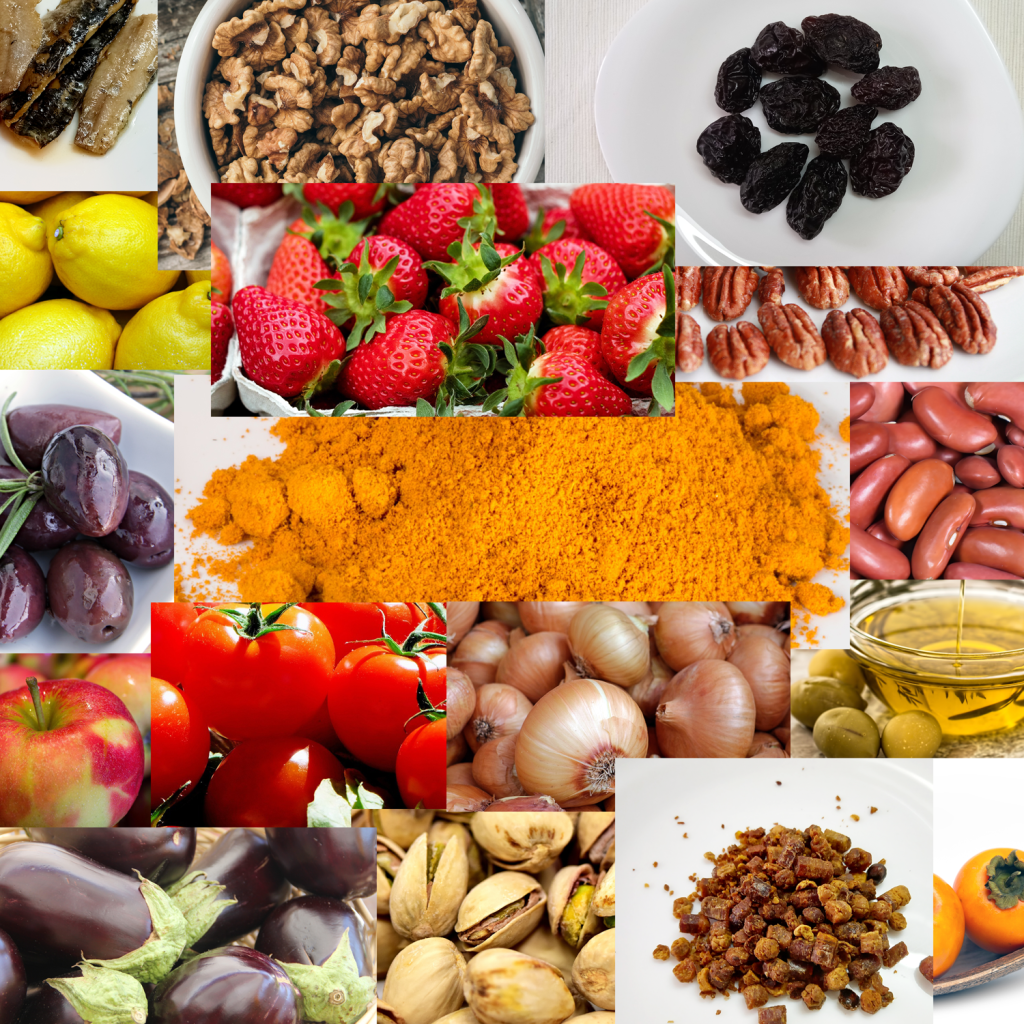
Foods that may help improve dyslipidemia and liver health in nonalcoholic fatty liver disease.
A version of this article was originally published in The Road to Wellness on Medium on Feb. 19, 2024.
Many of us are looking for ways to lower our cholesterol without statins, and we know that exercise, gradual weight loss, and giving up smoking can help a lot. But when it comes to food, some of us have been giving little advice besides eating very little trans fats and saturated fats and taking up a Mediterranean diet — with lots of vegetables and fruit, whole grains, legumes, nuts, seafood, and olive oil and other healthy fats — and eating foods with a lot of fiber.
As for me, aside from other elements of the Mediterranean diet, I’ve long since known that omega-3 and omega-9 fatty acids, along with polyunsaturated and monosaturated fats in general, are good for us. So I eat fatty fish, walnuts, and various seeds, and take an omega-3 supplement. I also use olive oil and try to have avocado regularly.
But it’s not enough. Because once you have a fatty liver you have to address that as well. You have to help heal your liver too if you want to have lower cholesterol levels. And you also have to improve your gut microbiome.
Disclaimer: I am not a medical or health practitioner, and no part of This Blog, or the articles, websites, and products I mention and link to on This Blog, is intended as professional medical or health advice, and should not be considered as such. Consult with your doctor(s) about starting any course of treatment, taking any supplements, or changing any (dietary, exercise, etc.) routines. Note that natural supplements and even some foods may interfere with certain medications. Also ask your doctor(s) about potential allergies you may have, including cross-reactive allergies. Some allergens can cause anaphylaxis. Here are my Full Terms and Conditions.
Disclosure: This blog post contains some affiliate links. If you click on (any of) them and make a purchase, they generate revenue for this blog (at no extra cost to you!). I am a Zazzle Associate and designer, and I earn commissions when you buy products through my referral links. All affiliate links on this blog are identified as such. Here’s my Full Disclosure.
I’m fighting elevated cholesterol and triglycerides myself, because, among other things, I’ve paid less attention lately to eating enough helpful foods, such as fatty fish and helpful fruit like prunes, and I’ve also been rather sedentary for too long since the pandemic. And then I’m also fighting perimenopause.
But surprisingly, things like intermittent fasting and eating smaller portions at longer intervals of time do help. You don’t even have to change much of the way you eat if you eat healthy enough. But if you do want to make the extra effort, there are foods that help lower cholesterol and triglyceride levels naturally while also improving nonalcoholic fatty liver disease (NAFLD). Of course, exercise also helps. A lot.
But I’ll stick to talking about foods in this article. Here are some ideas, in random order.
First, fruit also gives you a steady stream of energy, so instead of reaching for a sweet snack bar, you may want to reach for a piece of fruit or two and get your other nutrients from foods and meals with less sugars. An orange is a perfect snack, in my opinion. And did you know that vitamin C helps fight hypercholesterolemia? And not only by preventing LDL cholesterol from oxidation — which is extremely important, because this is what leads to arterial plaque — but also by actually reducing LDL cholesterol and triglycerides significantly. According to a 2008 meta-analysis, vitamin C is effective in reducing cholesterol at supplement levels as low as 500 mg per day (for a minimum of 4 weeks). You can take this amount in supplement form or you could get it from food — 500 mg is the equivalent of a meal of two kiwifruit, two oranges, some broccoli, and some kale. The advantage of getting your vitamin C from fruit and vegetables is that you get all sorts of other helpful phytonutrients.
Second, are you eating fermented foods, such as kefir and yogurt and/or sauerkraut and other pickled vegetables regularly? Are you drinking kombucha? Because these foods are important (here’s a 2020 study on how kombucha extract—tea—decreased hypercholesterolemia in New Zealand white rabbits fed a high-cholesterol diet). Fermented foods contain a wide range of probiotics, and probiotics improve the whole lipid profile (lowering TC and LDL cholesterol and triglycerides and raising HDL, “good,” cholesterol). They also help the immune system (among other things). See this 2010 article for the cholesterol-related health benefits of probiotics and prebiotics.
Third, and you may know this, as you eliminate trans fats and some of the saturated fats, try to cut back on sugar as well. Sugar is as bad for the liver as alcohol.
Fourth, beware of herbs, supplements, and foods that may hurt the liver. Green tea, for instance, is healthy, but too much of it, or green tea in supplement form, damages the liver. There was a case where someone needed a liver transplant after only three months of taking green tea supplements.
I’ll come back to foods, especially foods that you may not know have a positive impact on cholesterol and liver health.
But food may not be enough. It may be time for you, as it was for me about a year ago, to do a sensible detox first. I did one with the help of a doctor, and it helped bring my TC down 27 points and my HDL cholesterol up 6 points.
It wasn’t anything extraordinary but it was still very much needed, given that the liver has over 500 important functions in the body, including synthesizing cholesterol for other cells and removing it from the body as bile salts. Also, if you have high cholesterol, you probably also have a fatty liver, so it makes sense to address this issue as well, as NAFLD is strongly correlated to one or more of the health risk factors collectively grouped under the label metabolic syndrome. The latter includes insulin resistance leading to diabetes and high triglycerides, high total cholesterol and low HDL, or “good” cholesterol, along with high blood pressure that may lead to coronary heart disease and stroke; it often manifests outwardly through abdominal obesity, defined independently of BMI as a waist circumference of 35 in. or more for women, and 40 in. or more for men, indicative of excess visceral fat. If you don’t address NAFLD, it will progress until the fatty liver goes through all four stages of NAFLD and you end up with cirrhosis, which is severe scarring of the liver. Cirrhosis can lead to liver cancer and liver failure.
Back to various foods that help with hyperlipidemia. We soon get to soluble fiber, again something rather familiar to many of us. Beans, peas, lentils, and other legumes have it, then oats, of course, psyllium and various seeds, including flax, hemp, and chia (seeds that also have great levels of ALA, plant-based omega-3s), and let’s not forget vegetables and fruit, such as carrots, eggplant, sweet potatoes, apples, pears, and, of course, prunes.
Prunes, in particular, are traditionally revered as a great food when it comes to lowering one’s cholesterol. Apples are not too bad either, and, just like apples, oranges, too, contain quite a bit of pectin. Pectin is what helps give a thicker texture to jams and jellies and is present, in smaller amounts, in other fruits as well, such as strawberries, peaches, and apricots.
Citrus fruits also contain hesperidin, a flavonoid compound that also helps reduce cholesterol. According to a study published in 2011 hesperidin was shown to reduce total cholesterol and even ameliorate the hepatic steatosis of rats that were given a diet with added cholesterol (2%) and cholic acid (0.5%), along with 0.08% hesperidin in a synthetic form for 12 weeks.
Also worthy of note is a Spanish randomized study from 2020, known as PREDIMED-Plus, done on 6633 people of 65.0 ± 4.9 years, all of them suffering from at least three components of the metabolic syndrome. It concluded that dietary polyphenolic compounds — which include flavonoids and phenolic acids — along with moderate physical activity (walking 45 minutes a day or equivalent exercise) correlate with improved numbers for these components (disturbances in the metabolism of glucose, hypertension, low HDL-C, dyslipidemia, and abdominal obesity).
The participants were randomly separated into an intervention group and a control group. The ones in the second category followed a Mediterranean diet with added extra virgin oil and nuts, without any guidance on the foods consumed or the calories, and also without adherence to an exercise program. The study subjects were put on an energy-restricted Mediterranean diet (by 600 kcal, or about 30%), also enriched with extra virgin olive oil and nuts and less meat, sugars, white bread, processed fruit juices, and other sweet beverages, among other foods. They were also advised to walk 45 minutes per day or do equivalent exercise.
The Mediterranean diet the study group followed was a healthy but fun diet rich that includes a large variety of foods, such as apples, oranges, chocolate, tea, red wine, broccoli, walnuts and seeds, extra virgin olive oil and olives, and so on, including bread, coffee, and even beer.
This study is important because it was done on a cohort that already suffered from metabolic syndrome rather than on a healthy population or one only at risk for cardiovascular disease. It concluded that these polyphenols improved HDL-C and the various metabolic syndrome components.
The fact that this diet included fun foods is important. Nutritionists say, for instance, that when we crave chocolate we actually crave magnesium. There may be some truth to it, but sometimes we simply crave certain foods. I feel it’s important to listen to our body in that case, and simply make an effort not to eat too much of something if it’s high in sugar, for instance, and we want to limit our sugar intake. It can be done. I find that if you have a craving for something but you’ve just eaten enough, and taken your time eating so that you don’t overeat, you can just spend a minute in the kitchen pondering if you want to eat extra food while listening to the satiety signals in your body. You may find, to your relief, that you don’t want that dessert, after all, especially if you’ve overeaten the day before and not felt well on account of it. Another thing you can try is to postpone the dessert. Tell yourself that you will eat it later. This way you won’t feel deprived of it.
It’s also a good idea not to count calories, as foods are different and people are also different, and so calories aren’t that useful. This is not just me saying this but also doctors and nutritionists, including Haylie Pomroy in her book The Fast Metabolism Diet. Her diet is too strict and artificial for me, but she makes some very good points in her book and she also shares some useful recipes.
As for how many meals in a day one should have, dietary advice from nutritionists and MDs varies. Some say three meals; others say three meals with two snacks. Some say eat breakfast like a king, lunch like a prince, and dinner like a pauper; others say make lunch the biggest meal of the day and have a small liquid breakfast. Some believe smoothies and soups are better because they don’t encumber our digestive system much and thus give the body more time for detoxification, while others say that it’s important to eat solid foods and chew our food well because the saliva contains enzymes and chewing the food breaks it into smaller particles that place less burden on your esophagus and also helps the nutrients get absorbed better in the next phases of the digestive process. You also get to enjoy your food better and be more in touch with your body to sense when you’re full, among other health benefits.
Besides a Mediterranean diet and fruits like prunes, citrus fruits, and apples, nuts and seeds also help, and so do spices.
It may be a good idea to eat several nuts and one or two tablespoonfuls of seeds every day. I did have a mix of seeds as part of my detox, and after a while I decided to have some with yogurt every morning. Seeds are rich in nutrients like magnesium, the antioxidant vitamin E, and zinc, among other things. Seed oils, while less popular, are also very healthy, as long as you don’t use them as cooking oils but only as part of salad dressings. A 2011 study showed that pumpkin seed oil, for instance, helped reduce menopausal symptoms while also raising the good, HDL cholesterol and lowering diastolic blood pressure in menopausal women. Another study, from 2019, concluded that pumpkin seed oil helps with several markers of arterial hemodynamics, including arterial stiffness and systolic blood pressure. For more tips on how mild hypertension may be managed with natural remedies (but do talk to your doctor first!), see this article.
Pumpkin seed oil, among its other health benefits, also helps some with benign prostatic hyperplasia. Do note, however, that some people have a hypersensitivity to certain seeds and their oils.
Walnuts are also good if you’re struggling with high cholesterol, and not only then, as they are a great source of nutrients, among them omega-3 fatty acids as well as phytosterols, which also lower cholesterol. Seeds and legumes — and some veggies and fruit — are also high in phytosterols. But as with everything, consume in moderation, as you can get side effects such as nausea, diarrhea, and constipation. Also, some people have phytosterolemia where they can get atherosclerosis from phytosterols even as their cholesterol levels may not be very high.
Seeds, especially flaxseed and sesame seeds, and legumes are also a good source of lignans, a phenolic compound that helps lower total and LDL cholesterol and reduce inflammation.
According to a 2021 study done on 708 adults of 63 to 79 living in Barcelona and in Loma Linda, California, half a cup of walnuts added to the participants’ diet over a period of two years not only lowered their LDL (low-density lipoprotein) cholesterol, but also improved the quality of its particles. Their IDL (intermediate-density lipoprotein) also improved. Those who added walnuts to their diet also dispelled the misconception that walnuts are fatty and would lead to weight gain. Walnuts are a great source of omega-3 fatty acids and these participants who ate walnuts didn’t change their diets and they didn’t gain any extra pounds. And you don’t have to eat half a cup a day. Even less than that can be beneficial to your health, and, in fact, if you do take an omega-3 supplement that includes vitamin E, it’s probably good to eat just several walnuts a day. If you do include them in your diet, it’s best to eat them raw, as roasting can damage their healthy fats.
As a side note, some nutritionists advise soaking nuts before eating them, as they contain phytic acid, which may interfere with the absorption of nutrients from other foods.
I mentioned walnuts are high in omega-3 polyunsaturated fatty acids but walnuts and other nuts also contain monounsaturated omega-9 fats, the kind present in olive oil and avocados. As a side note, besides improving lipid levels — lowering LDL cholesterol, raising HDL cholesterol, and lowering triglycerides as well — , monounsaturated fatty acids can also help with weight loss — probably because these fats, which have been proven to raise insulin sensitivity, help with satiety, a biological process that’s impaired in overweight people dealing with insulin resistance, and which often leads them to overeat.
A small 2013 study on 26 adults aged 25 to 65, with a BMI between 25 and 35, normoglycemic and not taking any medications to regulate glucose and insulin levels, normotensive, non-smokers, and sedentary or with low physical activity also showed that half a Hass avocado included or added to a meal improves post-meal satiety in overweight adults, so if you’re trying to eat smaller portions and wait longer between meals to give your liver a better chance to detoxify, avocados may be a good food to include in your diet. Avocados contain both polyunsaturated and monounsaturated fats, both of which lower cholesterol levels. They’re also a good source of insoluble and soluble fiber.
Monounsaturated fatty acids also help reduce inflammation in the body, so they can help prevent many other illnesses. Compared to other foods, olive oil contains a huge amount of these healthy fats, so do indulge in olive oil on salads and even on toasted bread, or in avocado paste made with two of three avocados, lemon juice, garlic (or red onion, if you can’t tolerate garlic), a little salt, and a few tablespoons of olive oil, if you can tolerate raw garlic — if you don’t, note that you may enjoy it roasted or sautéed with vegetables. I like to make a lentil stew with sautéed onion, garlic, and ginger, and it’s delicious, and both lentils and ginger help with cholesterol as well — but I’ll come back to ginger later.
Some studies have tried using vitamin E for NAFLD. While this has shown some results, vitamin E thins the blood and it may not be a good idea to take too much of it, just as it’s best not to overdo it with any supplements. Note that vitamin E interferes with blood thinning medications and also keep in mind that too many antioxidants are a bad thing. It’s best to get vitamin E from your diet. Sources of vitamin E include sunflower seeds, almonds, other nuts and seeds, avocados, and salmon.
So fiber, such as pectin; omega-3 polyunsaturated fatty acids; monounsaturated fats such as those in olive oil and avocados, various nuts and seeds; phytosterols; lignans; vitamin E. Plant-based foods as well as healthy fatty fish are great if you want to lower your cholesterol and also live a healthier life in general.
Spices such as ginger and turmeric are also helpful. In one Pakistanese study from 2014, for instance, done with 5 grams of ginger spread out throughout the day for three months, the 27 hyperlipidemic participants in the study group, aged 18 to 70, lowered their TC from about 251 to 230 (an 8.83% reduction), and their LDL cholesterol from 185 to 157 (a 17.41% reduction), which is remarkable, if we consider that it was all due to one foodstuff. Five grams, however, seems too much an amount for daily consumption, as the gingerols and shogaols in ginger are blood thinners.
Turmeric, too, reduces LDL cholesterol and triglycerides. It also helps the health of your liver and helps prevent certain cancers, among other things, but as with everything, consume in moderation, as it thins the blood and can also cause other negative health effects, and rely on including it in your diet rather than taking it in supplement form. You can read more about turmeric here.
You can use curry to dishes such as meat and veggie stews, or with lentils and veggies. I also add it to doughs, along with ginger, cumin, and ground seeds.
There’s also bee bread — fermented bee pollen — which helps with liver health and also has antimicrobial and antioxidant properties, while also improving the gut flora, among other health benefits.
Then you can try herbal teas for cholesterol.
Melatonin is also purported to lower total cholesterol and triglyceride levels and help with NAFLD, but I haven’t experienced any such health benefit myself. In addition, melatonin is both a hormone and an antioxidant, and too much of it may not be very healthy.
There are many other foods that help lower cholesterol naturally, among them grapes, persimmons, strawberries, and plain old bananas and beans. Each person responds differently to nutritional elements, so talk to your doctor and make use of the foods that you’ve felt comfortable eating in the past and are excited about including them in your diet regularly, foods that your doctor may also recommend for you.
Cheers to your journey to better health and happiness!
And here’s another helpful article for healthy eating: Pay Attention to What Your Mother Eats. It May Do You a Lot of Good
And now here are some of my products with 35 foods that help lower cholesterol. Again, talk to your doctor first. This list, originally inspired by Chef Braux’s How to Lower Your Cholesterol with French Gourmet Food (affiliate link) and extended with more recent research of my own, is meant for information purposes only. Remember that some people have a hard time lowering their cholesterol with food and walking along with one dance class a week, as he did, or even with food and regular exercise, and they may need an allopathic treatment. Personally, however, I managed to improve my cholesterol and triglyceride levels about a year ago after a detox diet and then by including more cholesterol-reducing foods in my daily meals, and I managed that at the time with minimal exercise—well, I did go often for acupuncture and chiropractic treatments, so that counted too as exercise, I guess.
Here’s my list of 35 foods that help reduce cholesterol naturally. They include almonds, apples, avocado, garlic, lentils, onion, olive oil, lentils, persimmons (kakis), pistachios, prunes, salmon, walnuts, and many others. Enjoy!
Please note that the writing is much crisper on the actual products. Just click on the images to see them on Zazzle.


Mug for Righties (affiliate image link)

and smoke and drink less. Mug for lefties (affiliate image link)

Hard plastic beverage coaster with a cork back (affiliate image link)
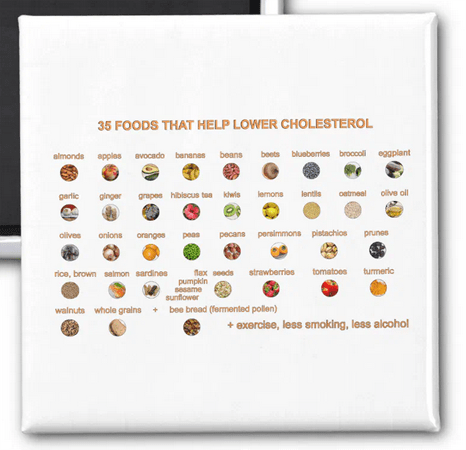
less smoking, and less alcohol. Magnet (affiliate image link)

along with exercise, less smoking, and less alcohol. Natural ways to reduce cholesterol
(affiliate image link)
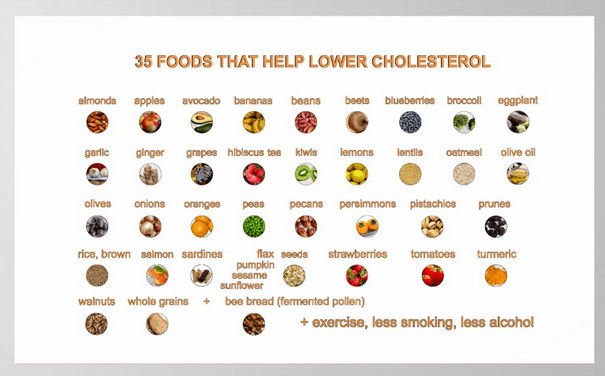
along with exercise, less smoking, and less alcohol. Poster (affiliate image link)
Thank you for reading! I hope you’ve enjoyed this article. As always, pins and shares are much appreciated!
To a happier, healthier life,
Mira
 HappierHealthier.Blog