


Foods my mother eats and which I, too, have adopted (Photo by the author)
I like to experiment in the kitchen and use modern superfoods, but my mother likes to eat traditional foods. Here are a number of them with some of their health benefits.
Part 2 of an article originally published on April 28, 2023 in The Road to Wellness on Medium
Here’s the first part of this article, published on this blog yesterday.
Disclaimer: I am not a medical or health practitioner, and no part of This Blog, or the articles, websites, and products I mention and link to on This Blog, is intended as professional medical or health advice, and should not be considered as such. Consult with your doctor(s) about starting any course of treatment, taking any supplements, or changing any (dietary, exercise, etc.) routines. Note that natural supplements and even some foods may interfere with certain medications. Also ask your doctor(s) about potential allergies you may have, including cross-reactive allergies. Some allergens can cause anaphylaxis. Here are my Full Terms and Conditions.
Disclosure: This blog post contains some affiliate links. If you click on (any of) them and make a purchase, they generate revenue for this blog (at no extra cost to you!). I am a Zazzle Associate and designer, and I earn commissions when you buy products through my referral links. All affiliate links on this blog are identified as such. Here’s my Full Disclosure.
Mushrooms
I was never a big fan of mushrooms, but my mother loves them. She mostly uses white button mushrooms and portobellos. One of her favorite dishes during Lent is a simple mushroom stew made with onion, olive oil, and parsley, seasoned with a mix of salt and dried vegetables. Lately, however, she discovered that she can eat mushrooms with pasta so that they’re less heavy on the stomach.
Mushrooms are rich in the antioxidant mineral selenium, which is highly important in the body, as besides fighting cancer cells and cell damage and boosting the immune system, it helps with DNA synthesis and thyroid health, and is also correlated with a lower risk of Alzheimer’s, among other health benefits.
Mushrooms are also rich in several B vitamins, which help with everything from the production of energy from your diet to the health of your skin and hair and then to the endocrine and nervous systems.
These fruiting bodies of fungi also contain beta-glucan fiber, which helps lower LDL cholesterol, prevents cancer, and boosts the immune system, among other things.
I have to say I was sick once after eating mushrooms, but then I tried eating (much) smaller portions, and I was fine — probably also because I chewed the food to tiny bits.
Mushrooms are notoriously difficult to digest because of the chitin fiber in their cell walls, which the stomach cannot digest, and their specific types of protein, which stomach acid has trouble breaking apart. In fact, when I barfed my mushroom meal twenty-four hours later, the mushrooms in there were not digested at all, but in the state I chewed them in (which is to say, in rather large pieces).
It’s generally thought that children, for instance, should stay away from mushrooms. Also, for adults, it’s recommended they don’t drink alcohol days before and after eating mushrooms, as alcohol makes the digestion of those proteins in mushrooms even harder.
That said, I’m now determined to incorporate mushrooms into my diet on a regular basis.
Apples, Oranges, Kiwis
My mother likes apples, oranges, and kiwis, and she always keeps two baskets in the kitchen full of these fruits (along with bananas).
Apples
Everybody knows the saying, “An apple a day keeps the doctor away,” but we know very little about what apples are actually good for.
Polyphenols, along with other compounds, and the fiber in apples help lower cholesterol quite significantly. I’ve known that for a long time, ever since I read a 2012 article about it, and yet I’m still having trouble eating my one apple a day (if not more).
Quercetin in apples inhibits the growth of cancer cells. Procyanidins, too, members of the proanthocyanidin class of flavonoids, reduce the risk of colon cancer and kill cancer cells.
Quercetin also protects against Alzheimer’s.
Apples also help you lose weight and thus indirectly reduce the risks of cataracts, which appear to be connected with obesity.
Indeed, at 74, my mother doesn’t even have incipient cataracts, and she has a trim body that looks more like 64 than 74. On my part, I’d like to lose 10 kilos, but I keep putting it off, as it seems I never have time for it.
As regards the fiber in apples, it doesn’t just help with digestion, colon health, and weight loss. It also helps prevent spikes in blood sugar levels and supports your immune system.
I have to say I do like my apples myself, but not just any apple. I have to happen across a really tasty batch to be tempted to eat them raw. But I do like to make baked apples (with walnuts and cranberries/raisins) and apple cake. Only I guess I’m not making them often enough.
What Mom does is use apples and oranges, and other fruit in fruit salads, which is a great idea, especially as she adds one can of fruit cocktail to prevent oxidation.
Oranges
Everybody loves oranges, and I do too, but I have little patience chewing sometimes. It’s not that I drink orange juice, because I rarely do, since I know the sugar and lack of fiber in fruit juices is not all that good for me. It’s just that I tell myself I’ll eat oranges, and then I don’t.
But, don’t you know it, oranges, too, reduce LDL cholesterol, among their other health benefits, so however easy it may be to whip up a smoothie with frozen berries, I’ll try to get used to peeling and chewing oranges more often as well.
Oranges protect against several types of cancer, boost the immune system, and help reduce blood pressure and blood sugar. In fact, with their vitamin C and flavonoids, they seem designed to protect the heart.
Mom is a big fan of oranges, which, by the way, she’s always peeled expertly (unlike me).
Kiwis
Mom eats a kiwi every two or three days. Kiwis are packed with vitamin C, and they also contain a good amount of fiber, more so than oranges. In some studies, vitamin C was shown to lower cholesterol levels. Other scientists disagree, but the fact remains that vitamin C helps prevent the oxidation of LDL cholesterol, which is critical when it comes to warding off atherosclerosis. Also, fiber is a highly important element in lowering cholesterol.
Kiwis also contain vitamin K, vitamin E, folate, copper, magnesium, and potassium.
Vitamin E, widely touted for its antioxidant properties, is probably less known for the good it does for liver health, for instance, where it was shown to reduce the levels of the liver enzymes ALT and AST and improve liver tissue in people with nonalcoholic fatty liver disease (NAFLD). It also helps improve cognitive function, among other health benefits.
Continued in Part 3 and Part 4. And Here’s Part 1
And now here are some of my products with 35 foods that help lower cholesterol. Again, talk to your doctor first. This list, originally inspired by Chef Braux’s How to Lower Your Cholesterol with French Gourmet Food (affiliate link) and extended with more recent research of my own, is meant for information purposes only. Remember that some people have a hard time lowering their cholesterol with food and walking along with one dance class a week, as he did, or even with food and regular exercise, and they may need an allopathic treatment. Personally, however, I managed to improve my cholesterol and triglyceride levels about a year ago after a detox diet and then by including more cholesterol-reducing foods in my daily meals, and I managed that at the time with minimal exercise—well, I did go often for acupuncture and chiropractic treatments, so that counted too as exercise, I guess.
Here’s my list of 35 foods that help reduce cholesterol naturally. They include almonds, apples, avocado, garlic, lentils, onion, olive oil, lentils, persimmons (kakis), pistachios, prunes, salmon, walnuts, and many others. Enjoy!
Please note that the writing is much crisper on the actual products. Just click on the images to see them on Zazzle.


Mug for Righties (affiliate image link)

and smoke and drink less. Mug for lefties (affiliate image link)

Hard plastic beverage coaster with a cork back (affiliate image link)
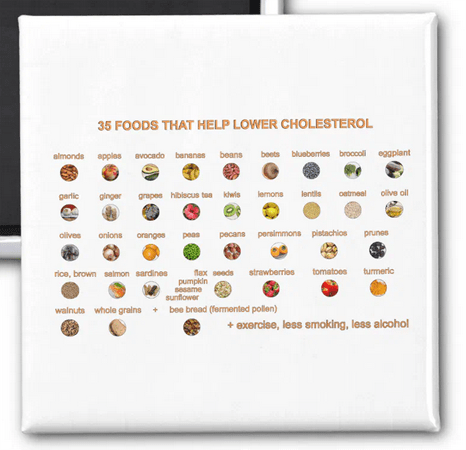
less smoking, and less alcohol. Magnet (affiliate image link)

along with exercise, less smoking, and less alcohol. Natural ways to reduce cholesterol
(affiliate image link)
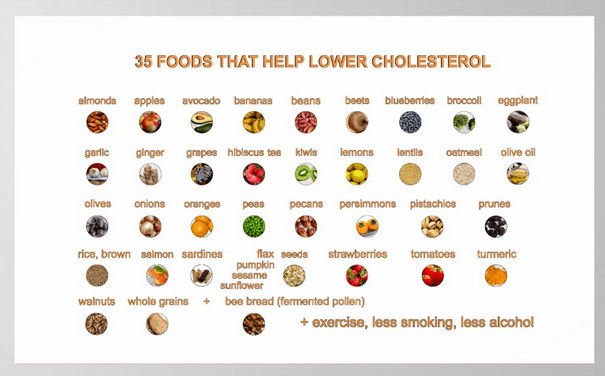
along with exercise, less smoking, and less alcohol. Poster (affiliate image link)
Thank you for reading! I hope you’ve enjoyed this article. As always, pins and shares are much appreciated!
To a happier, healthier life,
Mira
 HappierHealthier.Blog
3 Comments